
Private-Label Floorball Sticks: Approve Artwork in Its Installed Position
Review private-label floorball stick graphics after grip and blade assembly. Use a clear artwork release record for placement, visibility and package labels.

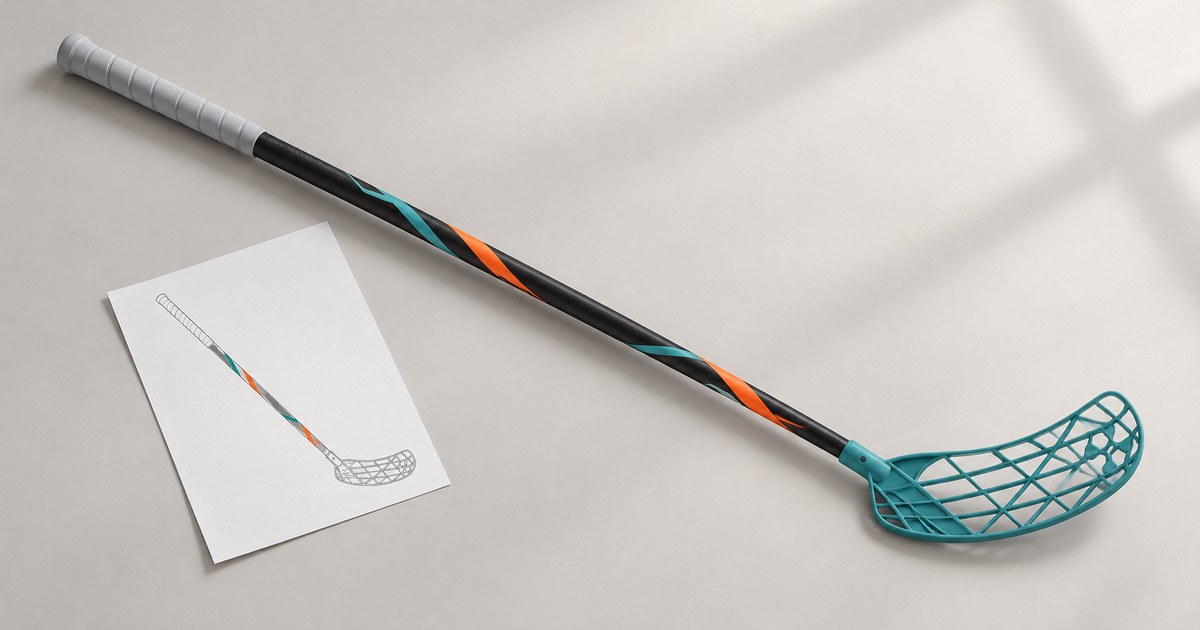
Approve private-label floorball stick artwork on the assembled stick, with the agreed grip and blade installed. A flat graphic can look correct while its main message faces away from the intended view, disappears under the grip or becomes difficult to identify in the delivered package. Keep the technical model fixed, then approve placement, appearance and order identification as a separate, traceable decision.
This guide is for buyers preparing a private-label sample or production handoff. It does not select a shaft flex or certify a finished stick. CarbonFiberWorld’s custom floorball stick listing provides the commercial starting point; the quoted configuration determines the supplied shaft, blade, grip and graphics.
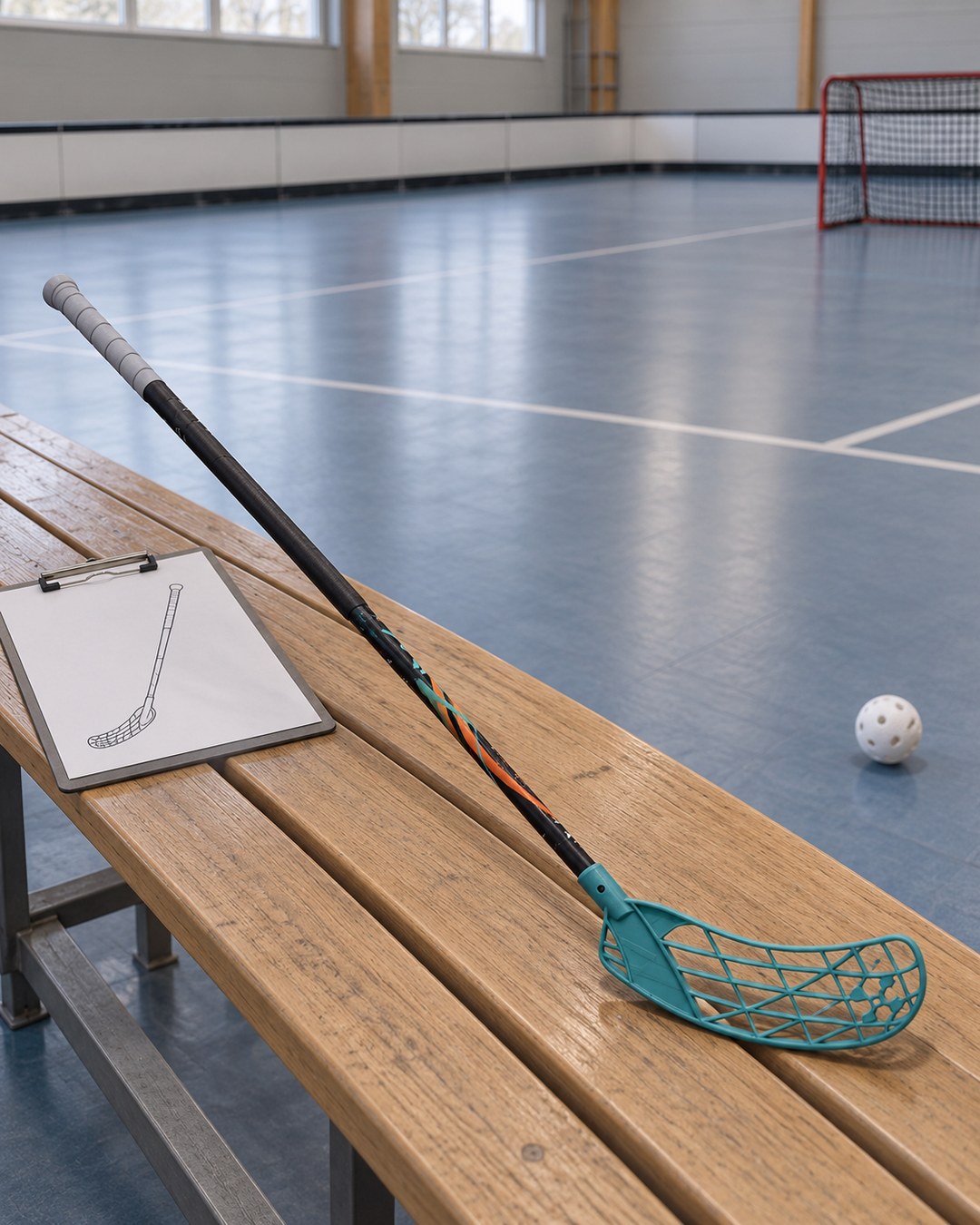
Images in this guide are original editorial illustrations, not photographs of an exact supplied model, a customer program or an actual approval record.
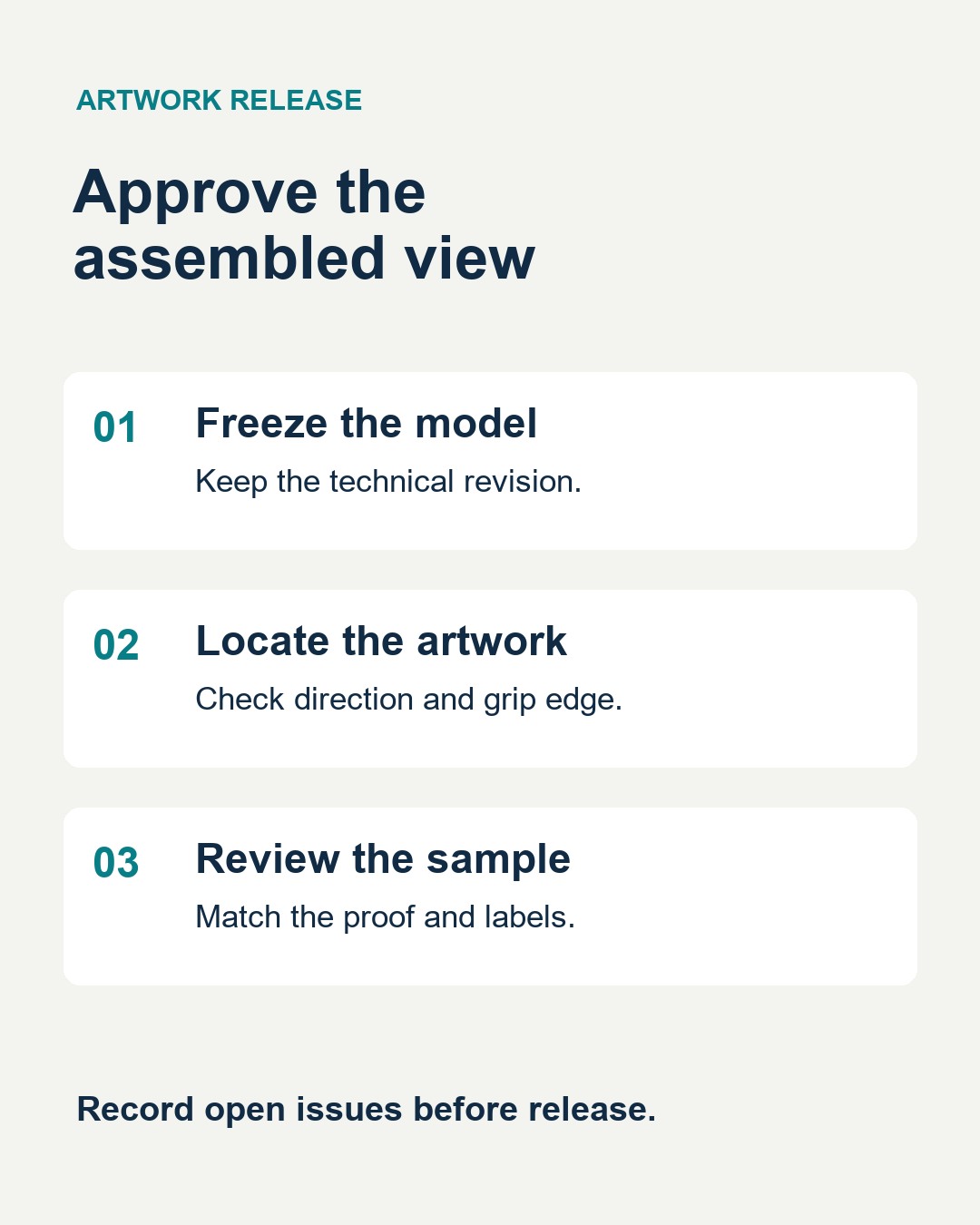
Freeze the technical model before approving the graphic
Give the artwork proof a technical-model reference. That reference should identify the agreed shaft construction, length, flex, blade and grip configuration. An artwork approval should state which of those requirements remain unchanged. If the design request also changes a grip, blade or finish, flag the change for a separate configuration review.
For the broader technical brief, use the existing floorball stick OEM specification checklist. This article addresses the later handoff: deciding whether the intended graphic is correctly represented on that specific assembled configuration.
The distinction reflects a real ordering pattern. The US supplier FloorballPlanet’s custom-stick page discusses shaft graphics, blade choice and grip color separately. Its published commercial terms apply to its own offer; they are not CFW prices, quantities, production methods or delivery promises.
Show the artwork on the assembled stick
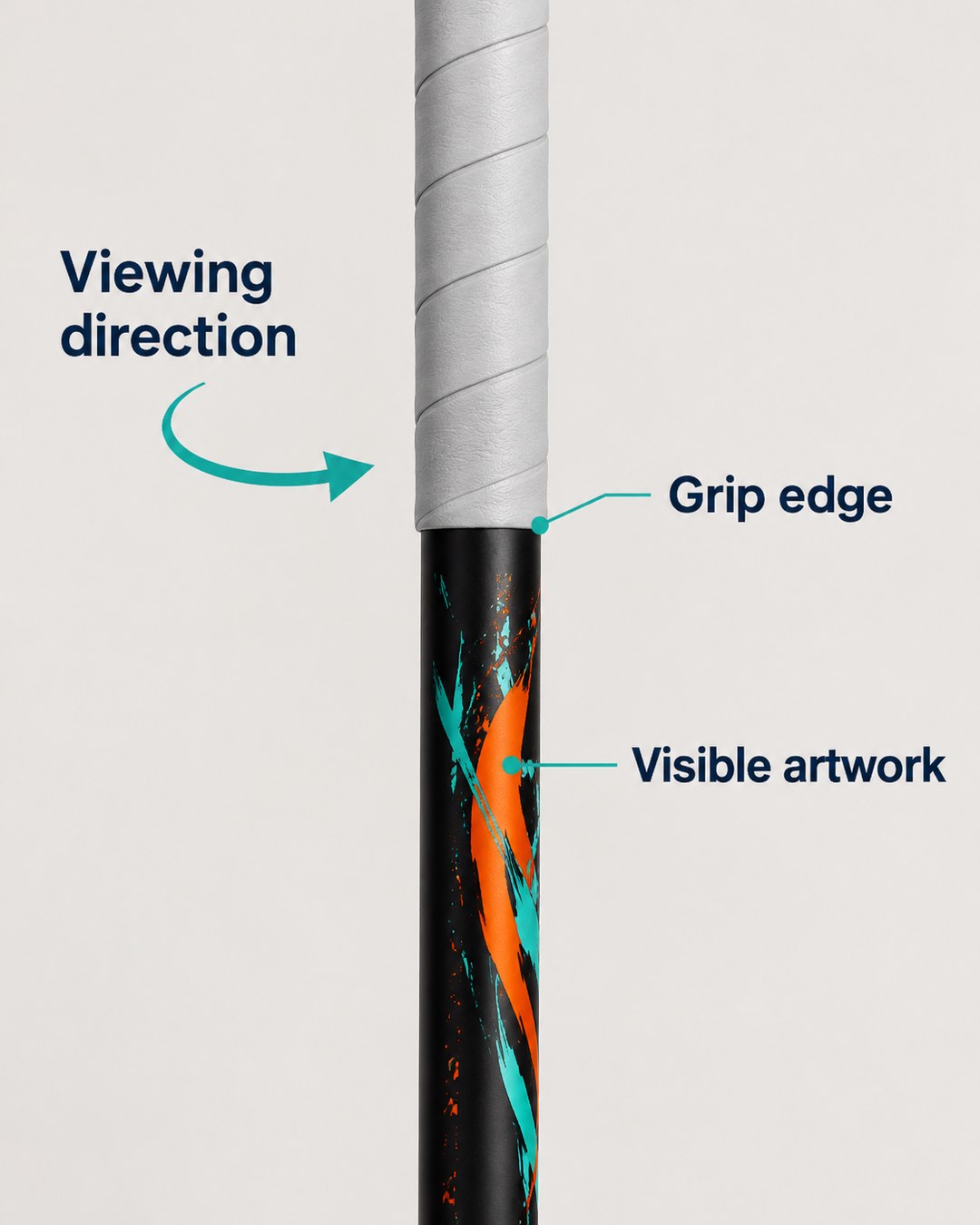
A placement proof needs both a reference point and a viewing direction. “Put the logo in the middle” leaves too much open on a long, narrow shaft. Mark the agreed reference point on a drawing or photograph, identify the visible side, and show where the artwork begins and ends. Record requested dimensions and tolerances with the supplier rather than estimating them from a perspective image.
- Include a full-stick view so the reader can relate the graphic to the grip and blade.
- Include a close view of each important graphic, text block and boundary.
- Show the assembled orientation used for approval. A flat print file alone cannot establish which way the message faces after assembly.
- Identify any overlap, seam or wrap-around feature that needs a specific viewing angle.
Keep grip coverage and official marks visible
Check the final grip coverage against the artwork proof. A different wrapping extent can conceal part of a graphic even when the printed file has not changed. Record the agreed grip boundary and inspect the assembled sample in the same view used for approval. Do not assume that changing grip color or wrap details leaves every other requirement unaffected.
For IFF-regulated play, artwork review also needs a clear boundary around official markings. IFF Rules of the Game 2026, rule 406, requires the appropriate stick approval and says that official marks must not be covered when the shaft is strapped. Review the applicable model and current competition requirements separately. A supplier’s graphic proof does not establish certification or permission to reproduce an approval mark.
Show the locations of required marks in the controlled approval document where applicable. Do not invent a certification number, add an official logo as decoration or use a similar model’s evidence to approve a different finished stick.
Agree an appearance reference rather than a screen impression
A digital proof can confirm spelling, file revision and intended placement. For appearance acceptance, agree what physical reference the buyer and supplier will use and under which viewing conditions they will compare it. Ask the supplier to identify the proposed print or finishing method; no particular method is implied by the illustration.
Separate the decisions in the approval record:
- Content: correct wording, owned or licensed artwork, and the final file revision.
- Placement: the agreed position, viewing side and relationship to grip and blade.
- Appearance: the agreed color and finish reference, plus acceptable and unacceptable examples if needed.
- Open issues: anything the digital proof cannot establish and the sample must resolve.
A phone photograph is useful for locating a feature. Avoid treating its color as a calibrated acceptance reference unless the comparison method has been agreed.
Use one artwork release record for sample and packing
The following record is an editorial template buyers can adapt. It is not a CFW inspection result or a claim that a specific production service has been agreed. Keep unresolved items open until the responsible parties confirm them.
| Record field | What to agree or attach | What it prevents |
|---|---|---|
| Technical baseline | Model and technical revision; identify unchanged shaft, blade and grip requirements. | An artwork approval being mistaken for a component-change approval. |
| Artwork identity | Final file name, revision and approval date; confirmation of artwork rights. | Production from an obsolete or unauthorized file. |
| Installed position | Marked reference point, viewing direction, agreed locations and grip boundary. | Correct artwork facing the wrong way or being covered. |
| Appearance evidence | Agreed physical reference and comparison conditions; sample photographs for location. | A screen impression replacing the agreed acceptance basis. |
| Sample decision | Sample identity, accepted points, open issues, decision owner and scope of approval. | A partial approval being read as permission to release everything. |
| Package identification | Order-line reference and label proof tied to the same model/artwork revision. | Correct sticks being packed or issued under the wrong reference. |
For mixed team orders, keep the artwork reference separate from the quantity calculation. The blade-side and team-order guide explains how to count confirmed configurations. A shared graphic does not make different lengths or blade sides one interchangeable order line.
Prepare an artwork review enquiry
Start with the CFW-2767 floorball stick enquiry. Provide the intended model and technical revision, artwork you have permission to use, marked placement views, the grip and blade configuration, quantity and destination. State whether the program requires competition approval and identify the exact model evidence that must be reviewed.
Send the configuration and artwork-review requirements to CFW so the proposed scope can be assessed. Keep appearance approval, technical acceptance and any certification decision explicit; do not release production on an ambiguous “looks good.”