
Water-Fed Pole Brush Changes: Check Both Connections

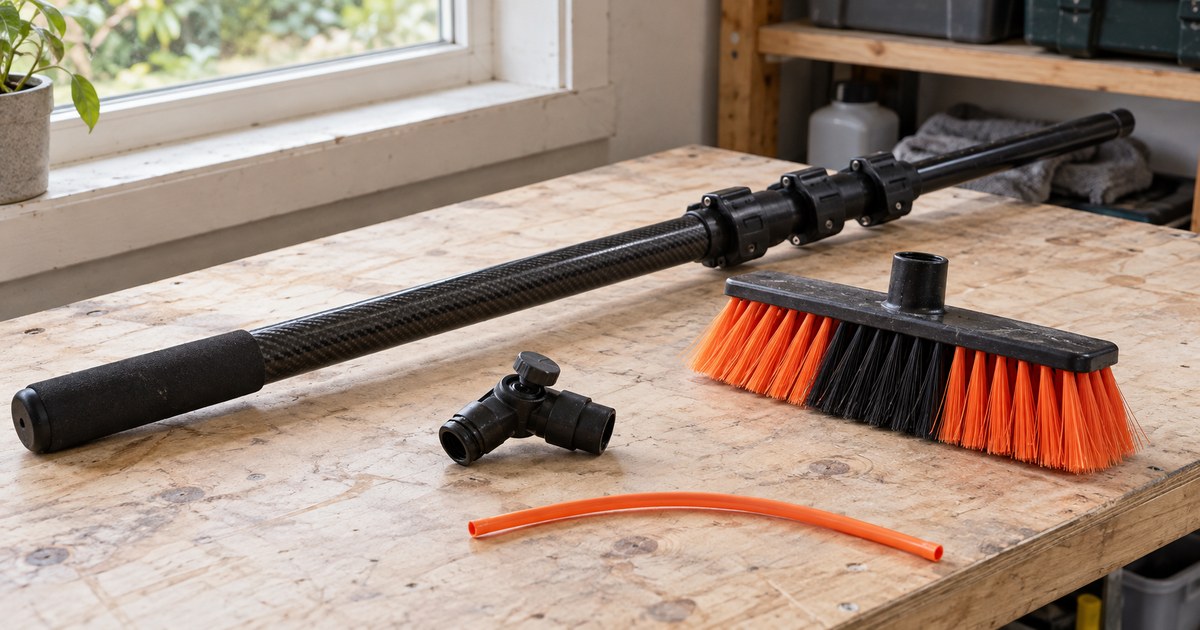
A water-fed pole brush change needs two separate confirmations: the mechanical connection that holds the head, and the water path that feeds it. A brush can have the right mounting arrangement while its hose connection still needs another part or a different routing. Before ordering, record both paths for the actual combination of retained and new equipment.
This guide helps equipment buyers and distributors plan a brush or head-adapter change on an existing pole. It provides a purchasing record, not installation instructions or approval to mix unconfirmed components.
Trace the mechanical connection and the water path separately
Start with the equipment you intend to keep. Identify the pole and its head-end fitting, the proposed gooseneck or angle adapter, and the brush or brush socket. That is the mechanical connection chain. Record which component joins which, using the manufacturer’s part references and applicable drawing or instructions.
Then trace the water path independently: pole hose, any intermediate tubing or connector, and the brush’s water inlet or jet-hose assembly. Name both ends of each connection. A label such as “quick connect” does not identify all the mating parts or establish their fit.
The two records may share components, but they answer different questions. Confirmation that a brush attaches to an adapter does not show that the existing hose reaches and connects correctly. Confirmation of a hose connector does not establish the mechanical attachment of the head.
Why a brush adapter may leave another question open
A useful manufacturer example is Gardiner’s QuicK-LoQ Brush Adapter to Euro Screw. Its listing describes a conversion between named brush and gooseneck systems, while also noting that a longer gooseneck hose may be needed with a particular angle adapter. The lesson is limited but practical: a mechanical conversion can leave a separate water-path requirement.
In the United States, Tucker’s accessory catalogue lists pole hose, hose quick-connects, tubing unions and mechanical tips as distinct items. An accessory name therefore needs its context in the proposed assembly. These manufacturer examples describe their own equipment; they do not establish compatibility with a CFW pole or another brand.
Keep the enquiry specific. Instead of asking whether a brush “fits water-fed poles,” ask the responsible supplier to identify the proposed mating parts, required connectors and applicable instructions for your named pole, adapter, brush and hose.
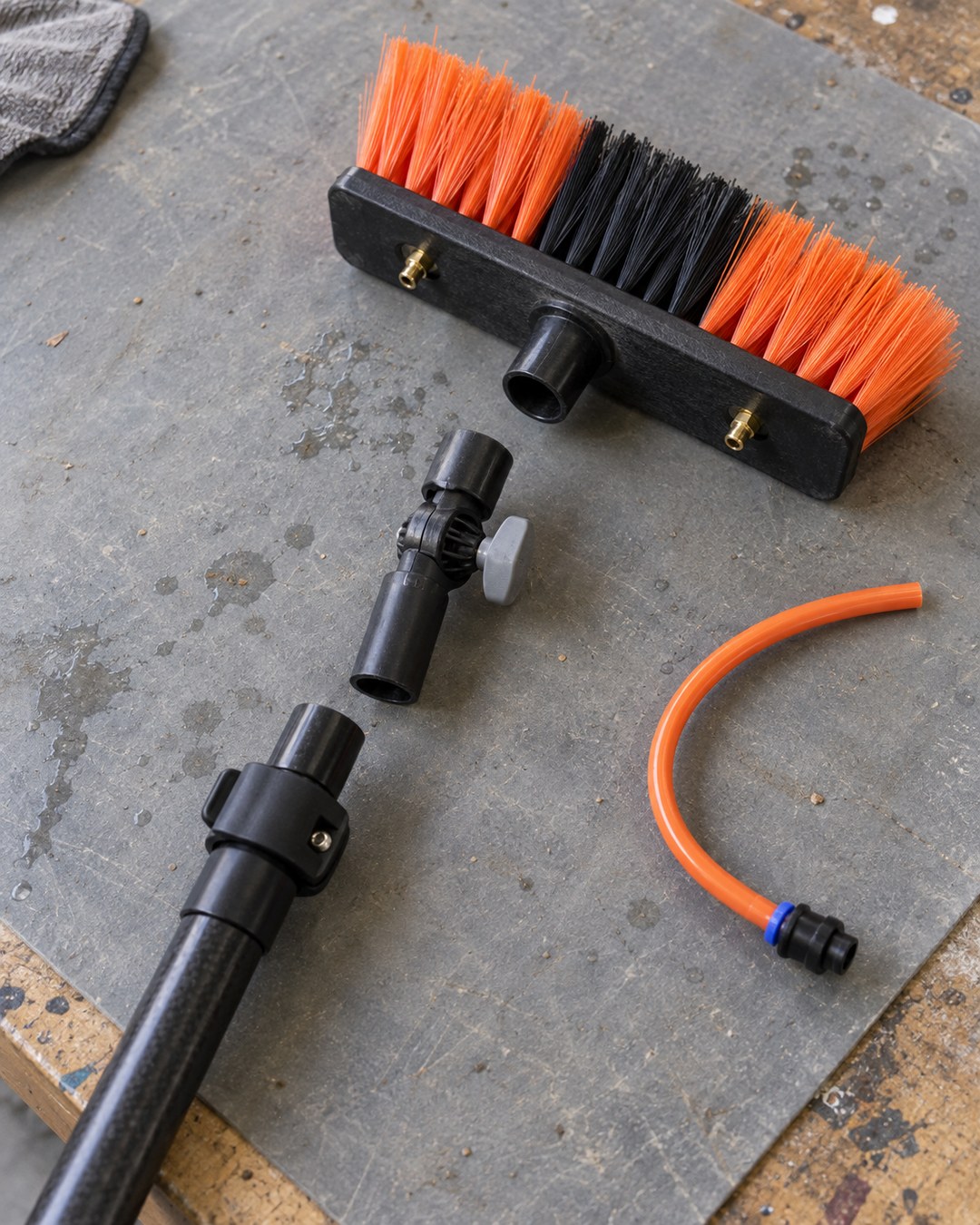
Make a two-path connection record
Use one record for the change so purchasing and the supplier can distinguish existing equipment, proposed replacements and unresolved joints. The table is an original planning aid; it contains no preset fitting sizes or claimed inspection results.
| Path or decision | Identify in the enquiry | Confirmation to retain |
|---|---|---|
| Mechanical: pole to head adapter | Retained pole/fitting reference; proposed adapter reference; relevant interface drawing | Supplier’s response for that exact pair and applicable instructions |
| Mechanical: adapter to brush | Adapter, brush and socket references; any conversion part | Confirmed mating combination and any required additional component |
| Water: retained hose to intermediate connection | Hose identity, stated dimension and whether it describes ID or OD; connector at each end | Connection details, required tubing and routing for the proposed arrangement |
| Water: intermediate tubing to brush inlet | Brush inlet or jet-hose assembly; joining components; proposed routing | Configuration-specific response and any unresolved hose requirement |
| Order scope | Each retained, buyer-supplied, newly supplied or excluded item | Itemized quotation and the version accepted for the order |
| Evidence and exceptions | Drawing/instruction revision, sample identity, reviewer and open questions | What has been confirmed, what remains conditional and who resolves it |
Use the terminology from the relevant manufacturer. If a dimension is supplied, identify the feature and unit; do not assume it refers to a bore, tube outside diameter or thread. Photographs can locate a component, but cannot supply an unrecorded mating dimension or tolerance.
A brush-change example with an unresolved water path
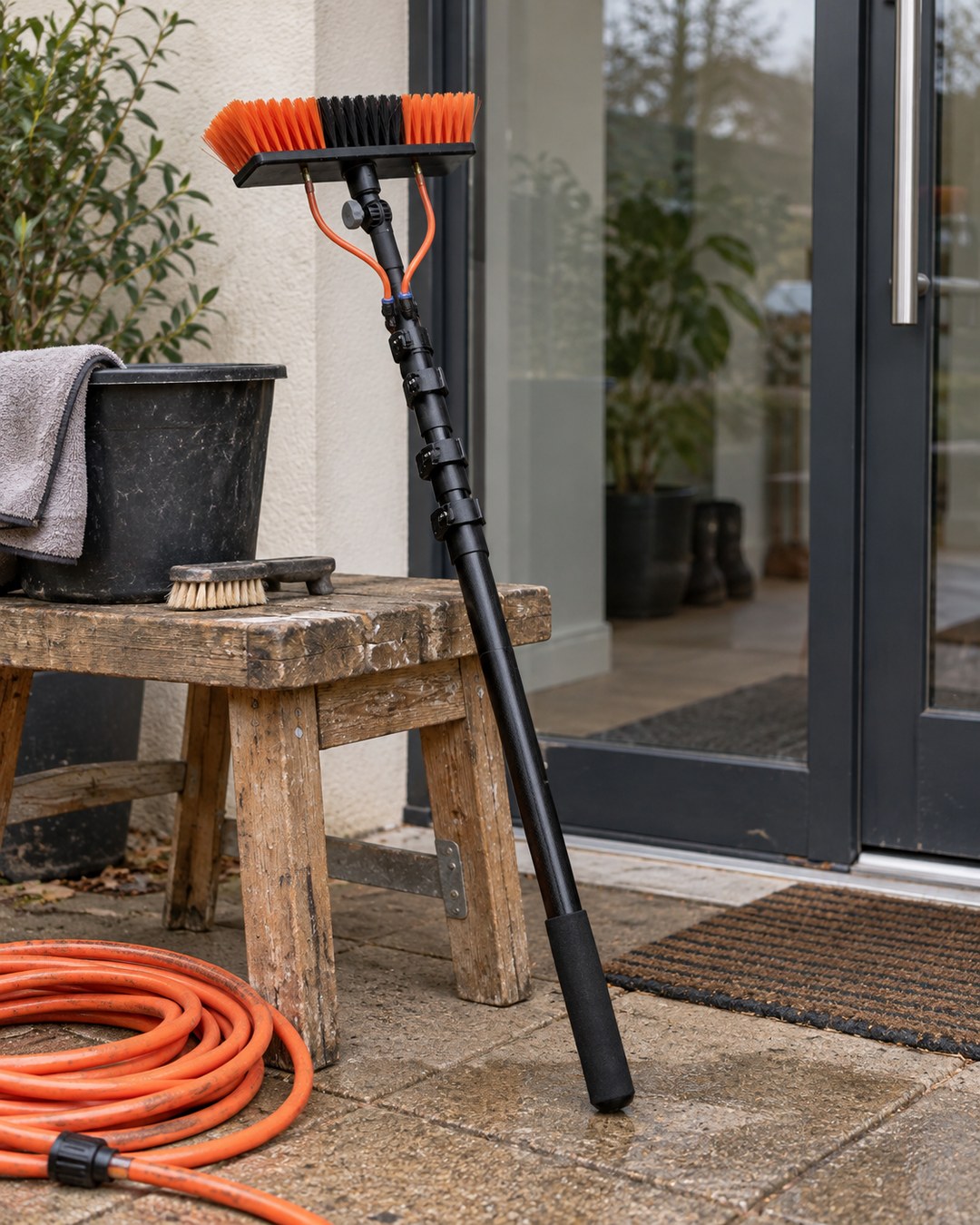
Consider a hypothetical fleet buyer keeping an existing pole and hose while ordering a different brush and an adapter. The supplier identifies a supported adapter-to-brush combination. That resolves one mechanical joint; it does not answer how the retained hose connects to the new brush inlet.
The buyer records the mechanical response as confirmed for the named pair, keeps the water connection conditional, and asks for the missing connector and tubing requirements. The revised quotation then identifies each new part and any buyer-supplied item. No one needs to interpret “brush and adapter supplied” as a promise that the whole existing assembly is ready to use.
If the water-path proposal changes an intermediate component, update that row and review the affected joints. Keep the unchanged pole identity in the record instead of recreating the entire equipment specification. This is a document-control decision, not a recommendation to modify equipment in the field.
Ask for evidence for the proposed combination
Agree what evidence is needed before releasing the order. Depending on the enquiry, that may include identified component drawings, the manufacturer’s connection instructions, or a review of a named sample assembly. Distinguish an agreed requirement from an actual result: “connection to be checked” is a planned action, not a completed fit or water-delivery test.
If a sample review is arranged, retain the identities of the pole, adapter, brush, hose and fittings, the applicable requirements and the recorded observations. Keep acceptance limited to that combination and scope. Follow the equipment manufacturer’s current instructions and resolve operating suitability separately; this purchasing guide does not establish safe working height, electrical insulation, flow or pressure capability.
The CFW Specification & Inspection Planning guide explains how to connect a requirement to a proposed check and requested record. For complete first-order length, clamp and package comparisons, use the existing water-fed pole specification guide.
Send a connection-specific CFW enquiry
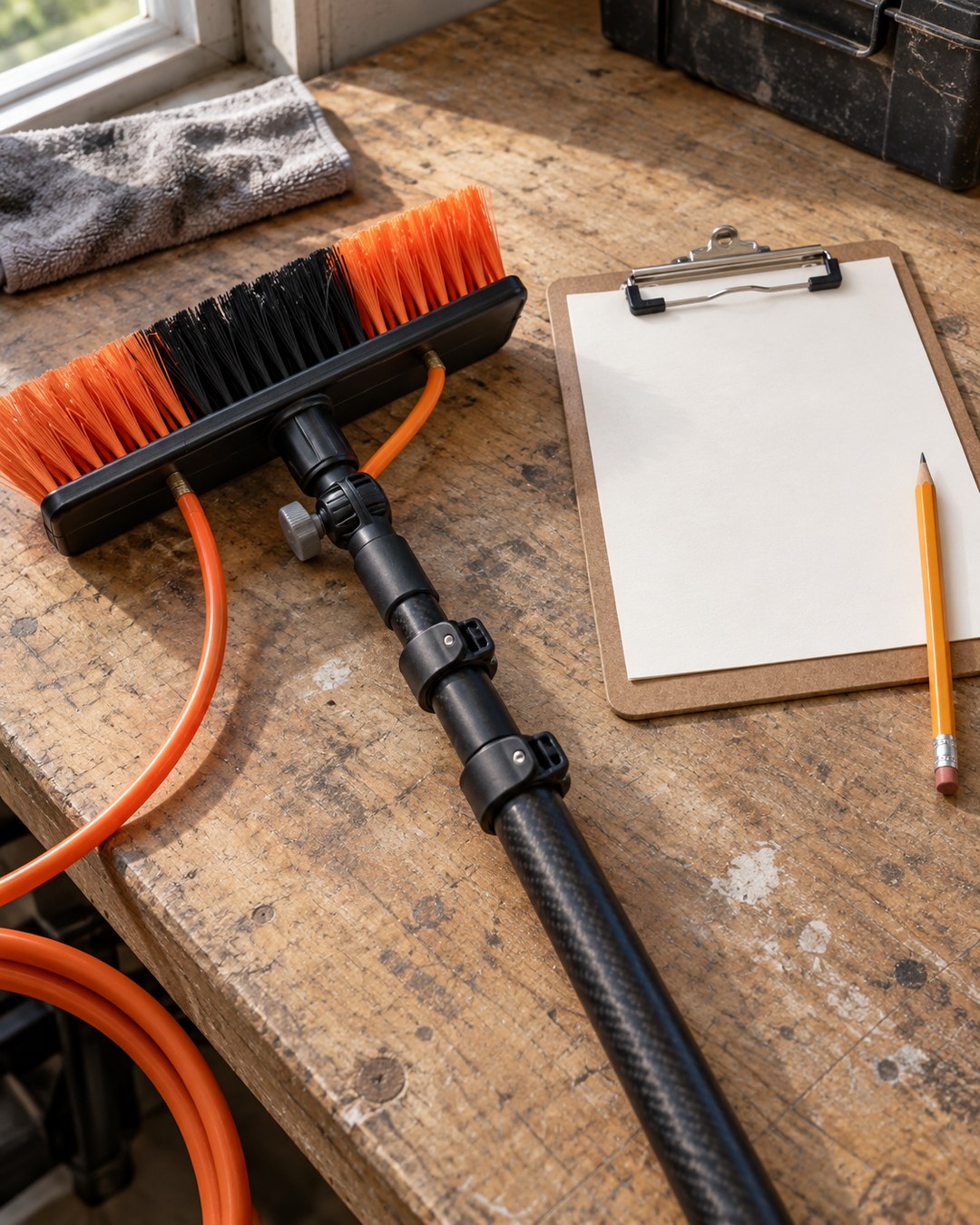
The current Carbon Fiber Water-Fed Cleaning Pole listing, reference CFW-2930, uses a configuration-led quotation and asks for brushes, hose and fittings to be itemized. It does not promise a universal brush interface or cross-brand fit.
- Identify: name the retained pole, brush/adapter and hose references.
- Map: list the mechanical joints and water connections affected by the change.
- Confirm: request the proposed components, evidence and unresolved exceptions.
- Record: keep the accepted parts list and revision with the order.
Send your CFW-2930 connection requirements with the record, requested quantity and delivery destination. State which items you already own and which you want quoted so the response can address the proposed combination.
Editorial sources reviewed October 16, 2026. The connection record and example are original editorial planning aids, not product tests or a completed customer project. Scene illustrations explain generic equipment-planning situations and do not depict a confirmed CFW configuration.