
Pickleball Paddle Balance Point: Define the Reference and Finished Build
Compare pickleball paddle balance-point figures only after defining the physical origin, direction, units and finished configuration. Use a blank OEM comparison record.

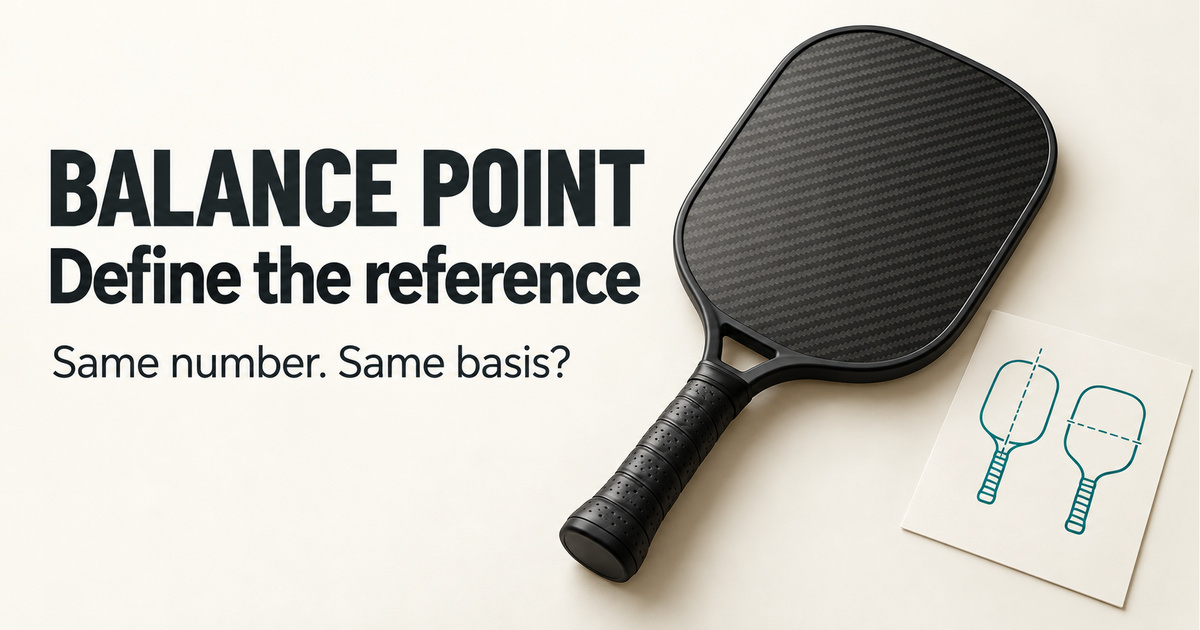
A pickleball paddle balance-point figure needs a reference before it can support an OEM comparison. Identify the physical starting point, the direction along the paddle and the finished build represented by the reading. A distance described only as “from the handle” leaves an important question open: which part of the handle defines zero?
For a US private-label buyer reviewing proposals or samples, the decision is whether the figures describe the same quantity on a comparable basis. An unclear origin or changed build calls for clarification before accepting or rejecting a result. This guide provides a record for that discussion, rather than a balance target or a testing service.
All accompanying visuals, including the featured image, are generated editorial illustrations of generic paddle concepts. They are not photographs of a CFW model, measurements, test results or approval evidence.
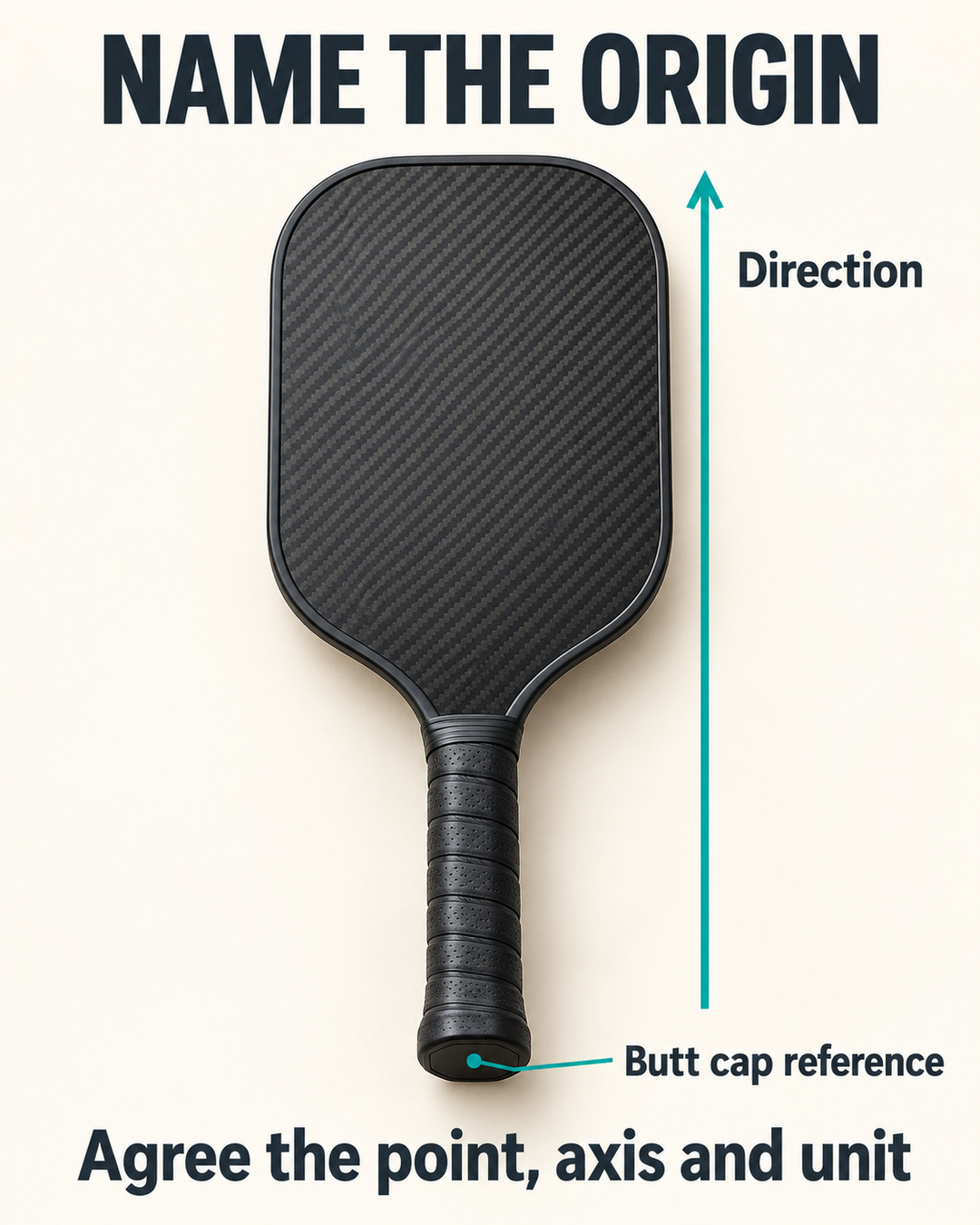
Name the physical reference and direction
Paddletek describes balance point as the position of the paddle’s center of mass along its length, using a distance from the butt cap. That is a manufacturer’s explanatory convention, not a CFW measurement standard. The useful procurement step is to agree exactly what physical origin and longitudinal direction the reported distance uses.
Mark the origin on a drawing or photograph of the relevant build. Identify the end surface, rather than relying on a label that could mean the grip edge, handle end or outside of an installed cap. Keep the unit, direction and method with the result. If a supplier uses another convention, record it explicitly before comparing values.
Bind the reading to the finished build
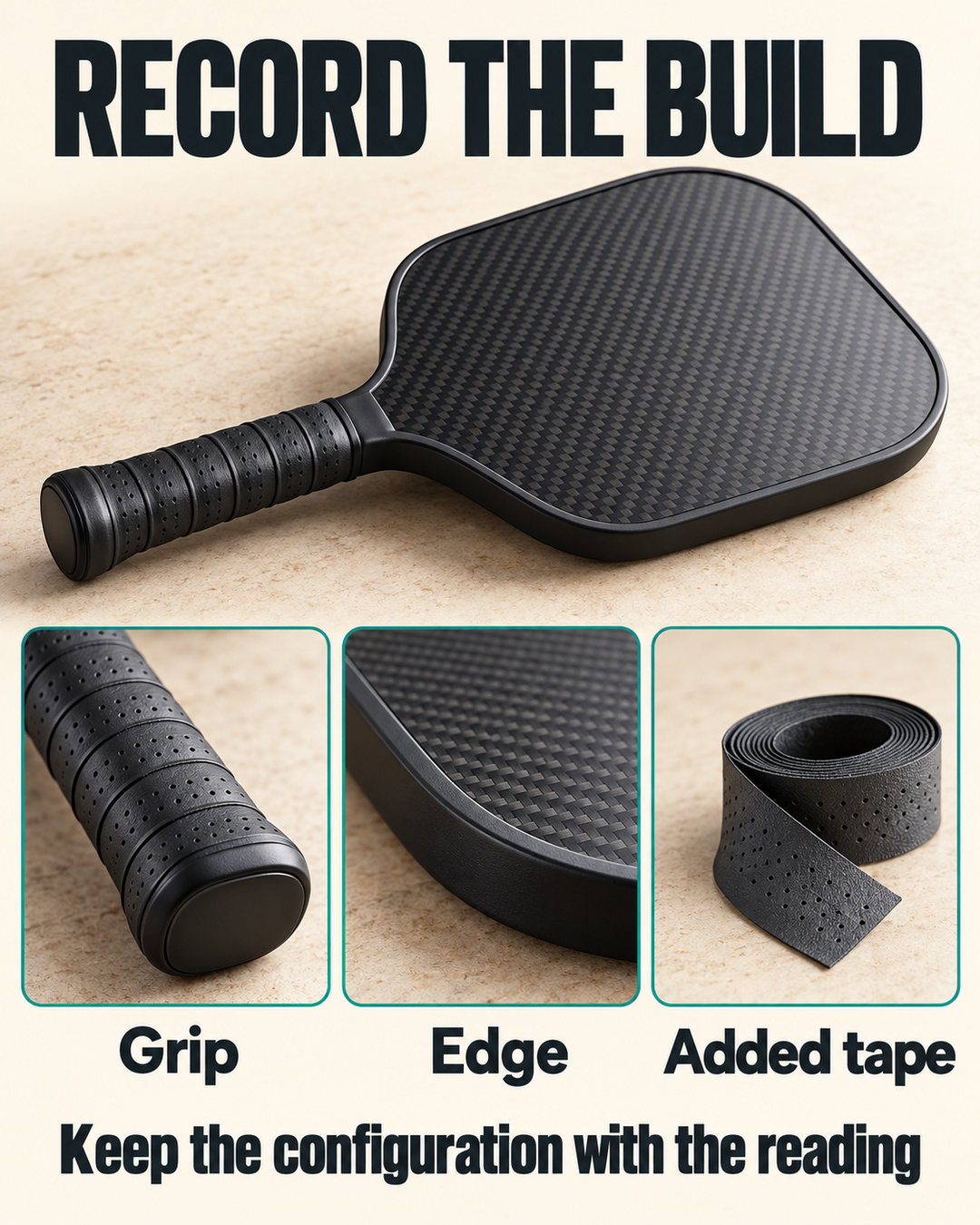
Identify the grip, any extra wrap, edge construction, butt cap and added weighting present during the check. Distinguish the finished paddle from a package containing loose accessories. A component reference is useful only when its installed state and revision are also clear.
If a grip, cap or another item changes, record the new build and review whether the earlier result still represents it. Do not assume that shifting a reference coordinate accounts for every effect of a changed assembly. The shape and core-thickness comparison guide addresses geometry and other changed variables; here, carry that build identity into the balance-point record.
Use a reference-and-build comparison record
Keep the requested convention and the actual sample evidence separate. The blank cells below are intentional project-entry spaces for two proposals or samples. This is an original procurement aid, not a completed inspection sheet or a list of confirmed CFW services.
| Field to identify | Proposal or sample A | Proposal or sample B |
|---|---|---|
| 1. Identity: model, sample ID and drawing/build revision. | ||
| 2. Finished build: installed grip, wrap, edge, cap and any added weighting. | ||
| 3. Physical origin: marked surface or feature, with drawing/photo reference. | ||
| 4. Direction and unit: longitudinal reference and distance convention. | ||
| 5. Method and condition: agreed procedure, orientation and relevant limitations. | ||
| 6. Evidence: requested value, actual result or unmeasured status, sample scope and record ID. | ||
| 7. Decision: matched basis or clarification needed; acceptance reference, owner and changes. |
Resolve the mismatch before drawing a conclusion
Consider a hypothetical comparison: one supplier identifies the outside of the installed butt cap as the origin; another reports a distance “from the handle” without a marked reference. Matching units do not resolve that difference. Ask the second supplier to identify the origin and confirm the build, then decide whether the results can be compared. The unclear entry alone proves neither a defective paddle nor compliance.
A longitudinal balance-point distance also does not replace total mass or swing-weight evidence. Keep any separately requested quantity with its own definition and method. The paddle selection guide covers the broader static-weight and swing-weight distinction; this record does not predict playing performance.
Prepare a CFW-2854 enquiry
The CFW-2854 carbon-fiber-face paddle reference supports a custom OEM brief. Its quotation-led listing asks buyers to define finished dimensions, target weight, grip, edge construction and package contents. It does not publish a balance-point value, tolerance or measurement protocol. Ask whether the proposed requirement and evidence scope can be agreed for your order.
Send the CFW-2854 build and balance-reference requirements for quotation review. Include the marked origin and direction, finished configuration, requested balance-point description and unit, any existing sample evidence, order quantity and destination. Identify open requirements and confirm how supporting drawings should be transferred.
This article and its comparison record are original source-informed editorial synthesis. They report no first-party CFW balance measurements.