
Event Flagpole Kits: Count Complete Displays Before Dispatch
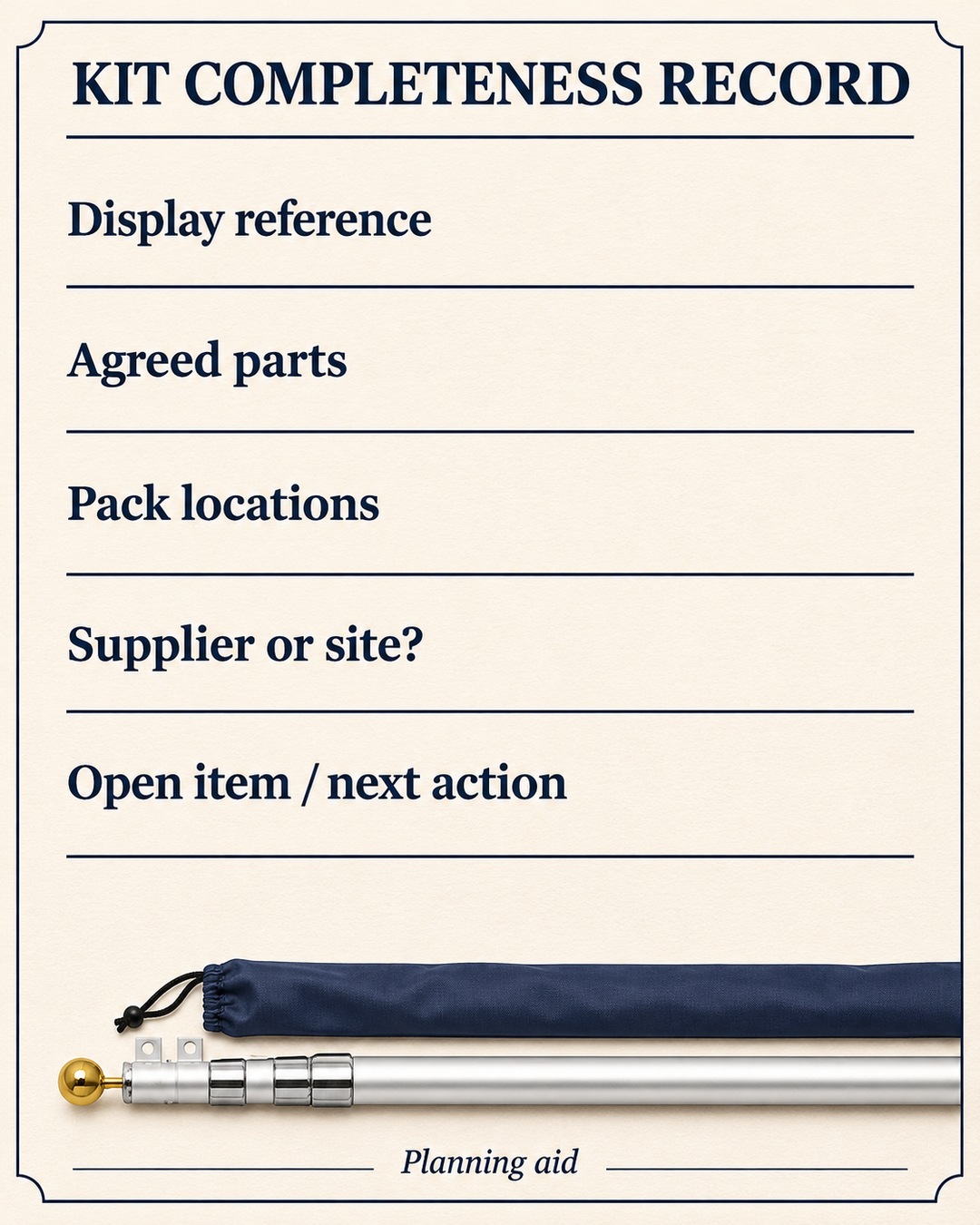
Account for each agreed event display across separate packs. Use a kit completeness record to distinguish allocated parts, spares and open responsibilities.

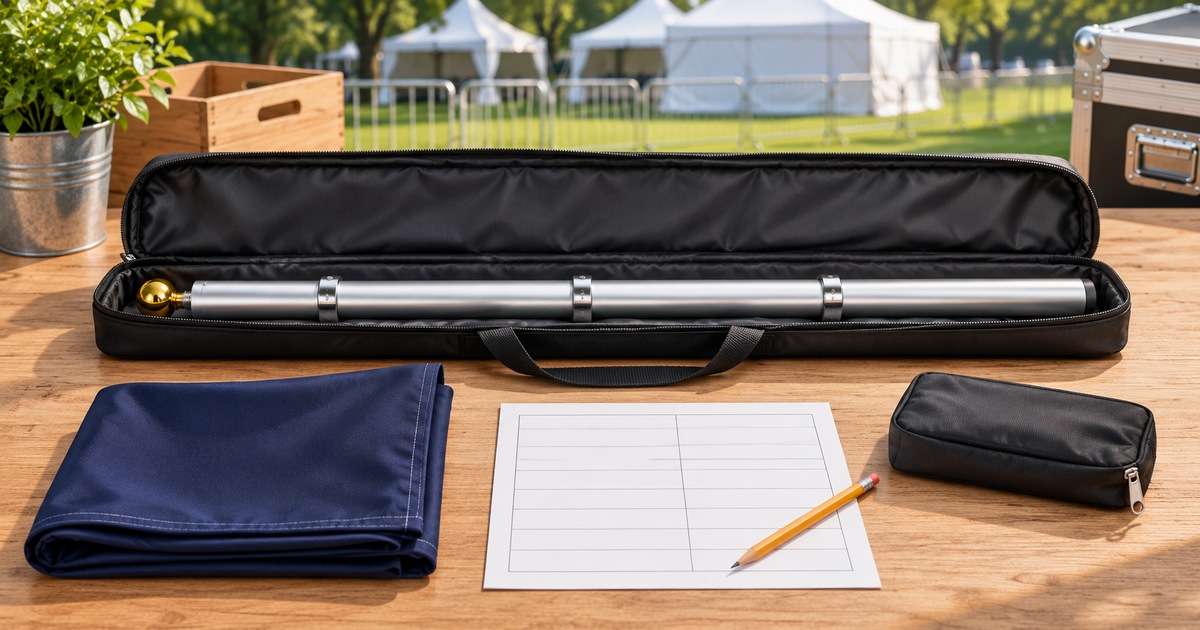
Count event flagpole kits from an agreed component list, then check that each required display has its parts accounted for before dispatch. Pole totals, loose accessories and bag counts describe different things. A shipment can contain the requested number of poles while a particular display still lacks an agreed fitting or has its base in another delivery. Figures are original planning illustrations; they do not document an actual shipment or completed inspection.
This guide is for event suppliers, distributors and purchasing teams preparing several displays for different positions or crews. The kit completeness record below links each display to its required components, supply responsibilities and packs. It is a buyer-side planning aid; the agreed order defines what belongs in each kit.
Define one complete display before counting
Give each display a kit reference tied to its agreed configuration and mounting arrangement. List the pole assembly, flag, mounting components and other items only where they belong to that configuration. Identify whether a component is supplier-supplied, already held by the buyer or provided at the event site.
Keep three quantities distinct:
- Complete kits: displays for which the agreed required components are accounted for.
- Loose components: individual poles, fittings or other items awaiting allocation.
- Spares: extra items held separately from the required allocation.
A site-provided item can complete the planned scope without being in the supplier’s shipment. Its responsible contact and availability still need confirmation. Keep shipment completeness and readiness at the event as separate decisions.
The flag, pole and base ordering guide helps establish the general order scope. Use the record here to check how that agreed scope is fulfilled across the actual packs.
Map each kit across its separate packs
Connect every required component to a pack reference or another confirmed location. A kit may span a pole bag, a base bag and a small-parts pack; one carton may also hold parts for several kits. Record those relationships instead of treating each carrying piece as a complete display.
For example, Fresco’s telescopic flag bag set has separate bags for the pole and base. That is its product arrangement, and a useful illustration of why bag count and display count need different fields. It does not establish the packaging or contents of a CFW order.
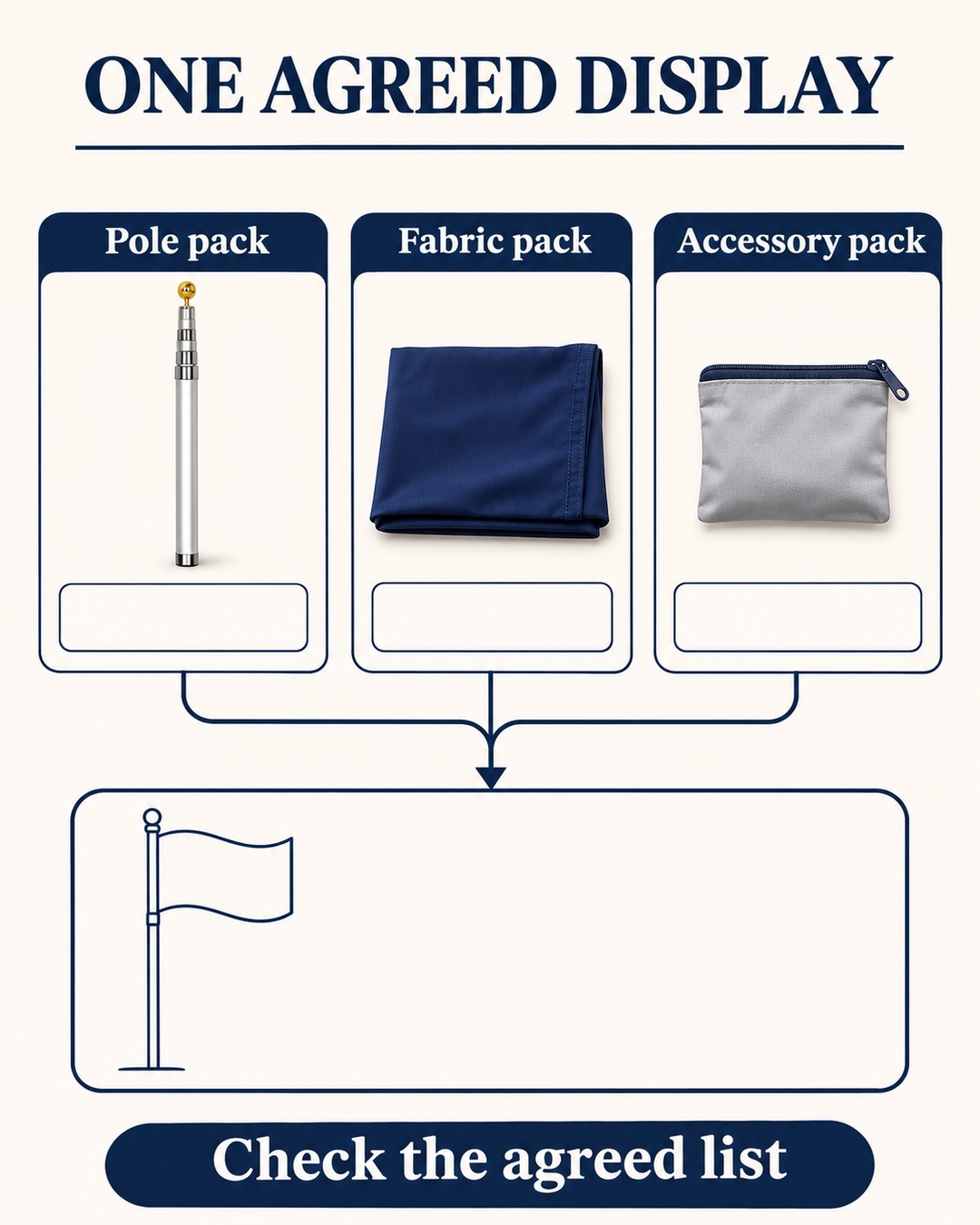
For mixed configurations, confirm the reference of the allocated item as well as its quantity. A surplus part from another configuration does not resolve a shortage unless its suitability is confirmed. Keep physical-fit questions in the relevant model review; the separate ground-sleeve fit checklist covers that interface.
Separate spares, options and site responsibilities
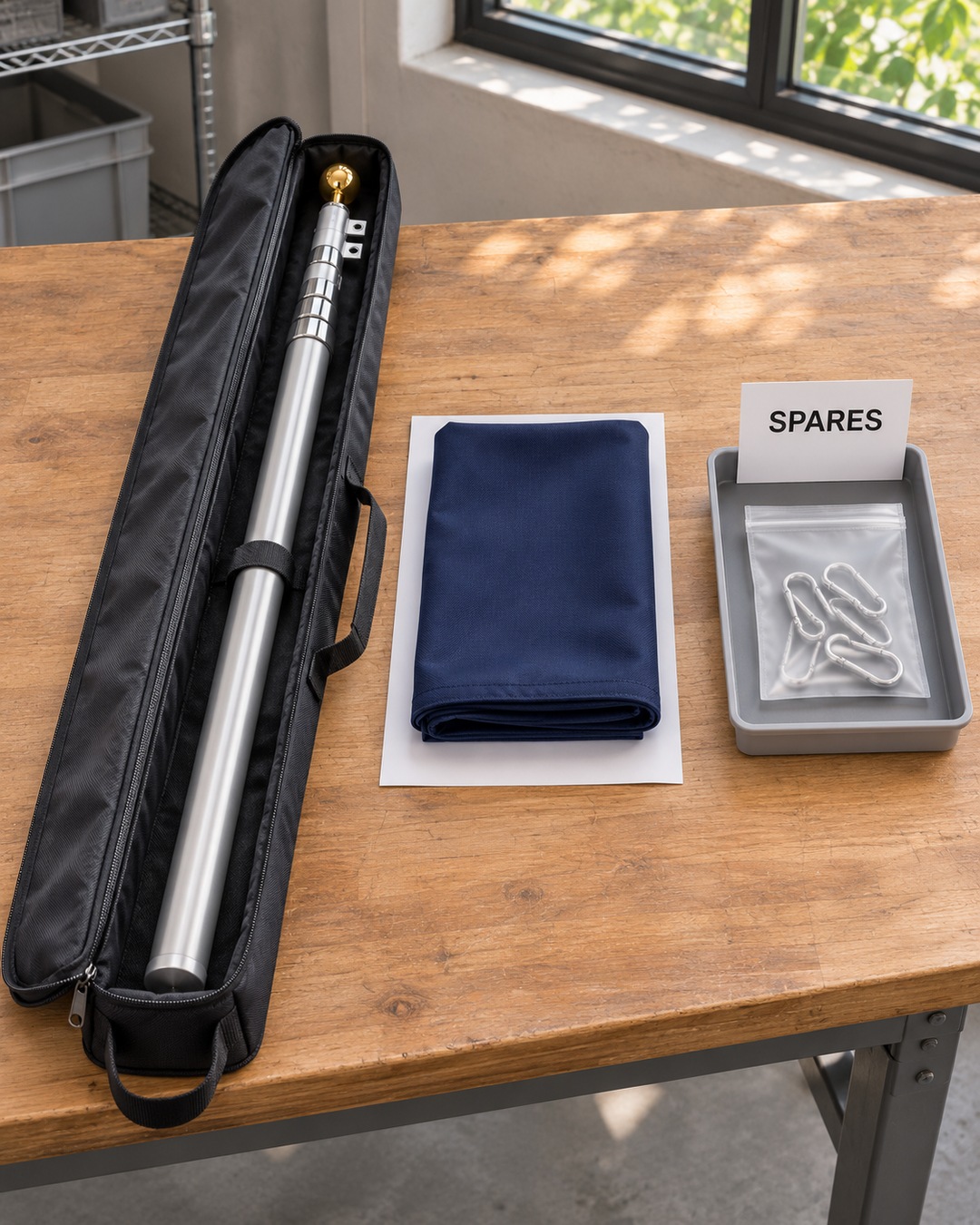
Do not allocate a shared spare to several kits at once. Record it in a spare pool, with its intended configuration and location, then update the allocation if it is issued to a specific kit. Otherwise the same loose component can make several incomplete sets appear complete.
Optional items also need an explicit decision. Flagpole Farm’s Titan kit description distinguishes its included contents from an optional solar light and notes that its polyester flag option ships separately. These are named-product examples of inclusion and shipment boundaries, rather than a standard contents list for other suppliers.
Assign site responsibilities just as clearly. Quinn Flags’ multi-use telescoping pole instructions separate included components from required tools and accessories that are not included. For your order, ask who provides each required item and when it will be available, using the selected system’s instructions.
Complete one record for each agreed kit
Start with the kit reference, configuration, mounting reference and intended event position. Add rows from the buyer’s agreed list, including items supplied outside the shipment. The blank table is original editorial organization, not a completed inspection record.
| Component and reference | Required / accounted quantity and unit | Supply owner and pack/location | Status and next action |
|---|---|---|---|
Record the quantity actually accounted for against the quantity required, using the same unit. Use confirmed, open or short, with the evidence or action beside it. Count a kit as complete only when every required quantity, supply responsibility and location is confirmed. A blank, open or short row does not establish a complete kit. Identify separately shipped items by their actual dispatch or receipt record. A packing photograph can show visible arrangement; it cannot verify hidden contents or an unrecorded delivery.
Resolve a short kit before releasing its allocation
Identify the affected kit and exact missing, unverified or mismatched component. Ask the responsible party to confirm its location, provide the correct item or propose a revised scope. Record who accepts that change and whether it affects another kit or the event handoff.
Recheck the affected allocation after a correction. Moving a part from another kit may transfer the shortage; count both allocations again. Keep an unresolved kit marked open or short, and agree its disposition with the receiving team before dispatch. Contents reconciliation does not establish safe installation, wind limits or compatibility.
Send the agreed kit scope with your enquiry
CFW’s Aluminum Telescopic Flagpole, reference CFW-2879, lists an aluminum telescopic pole with height and mounting selected for the order. Flags and accessories are itemised in the quotation; the reference does not define a fixed kit.
Send your required display quantity and component scope, together with the mounting reference, supply responsibilities, proposed pack allocation, spare requirements and destination. Identify open items and agree how to transfer supporting documents. The quotation should make clear which items are supplied and which remain with the buyer or site team.
Sources reviewed on 5 November 2026. The record is original editorial synthesis; generated figures illustrate planning contexts, not an actual shipment or completed check.