
Water-Fed Pole Transport Fit: Check the Stored Assembly
Check the pole as it will be stored. Define its attachments, usable space and opening, then retain evidence for the same proposed arrangement.

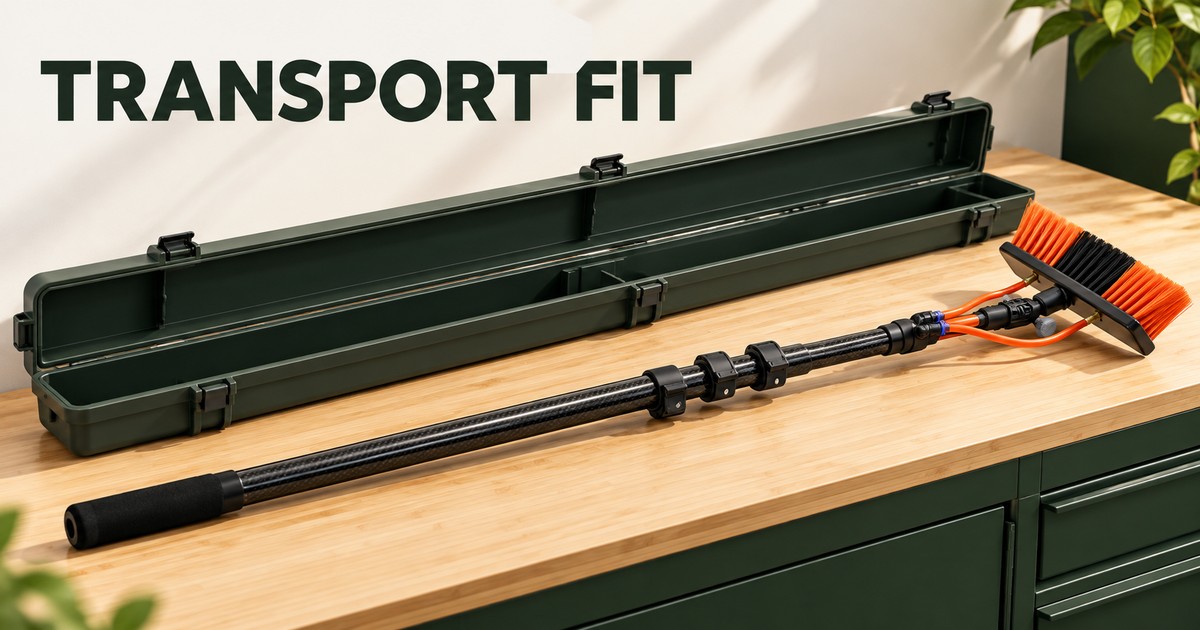
A water-fed pole transport-fit decision should cover the complete stored assembly, the storage opening and usable space, and evidence from that same configuration. Matching a collapsed-length figure to a bag’s outside length is only an initial screen. It does not establish that an attached brush passes through the opening or that the closure can operate.
This guide helps equipment buyers and distributors define a storage arrangement before approving it. For the basic length fields, use the water-fed pole specification guide. The task here is the fit of the proposed stored assembly.
Name the configuration that will be stored
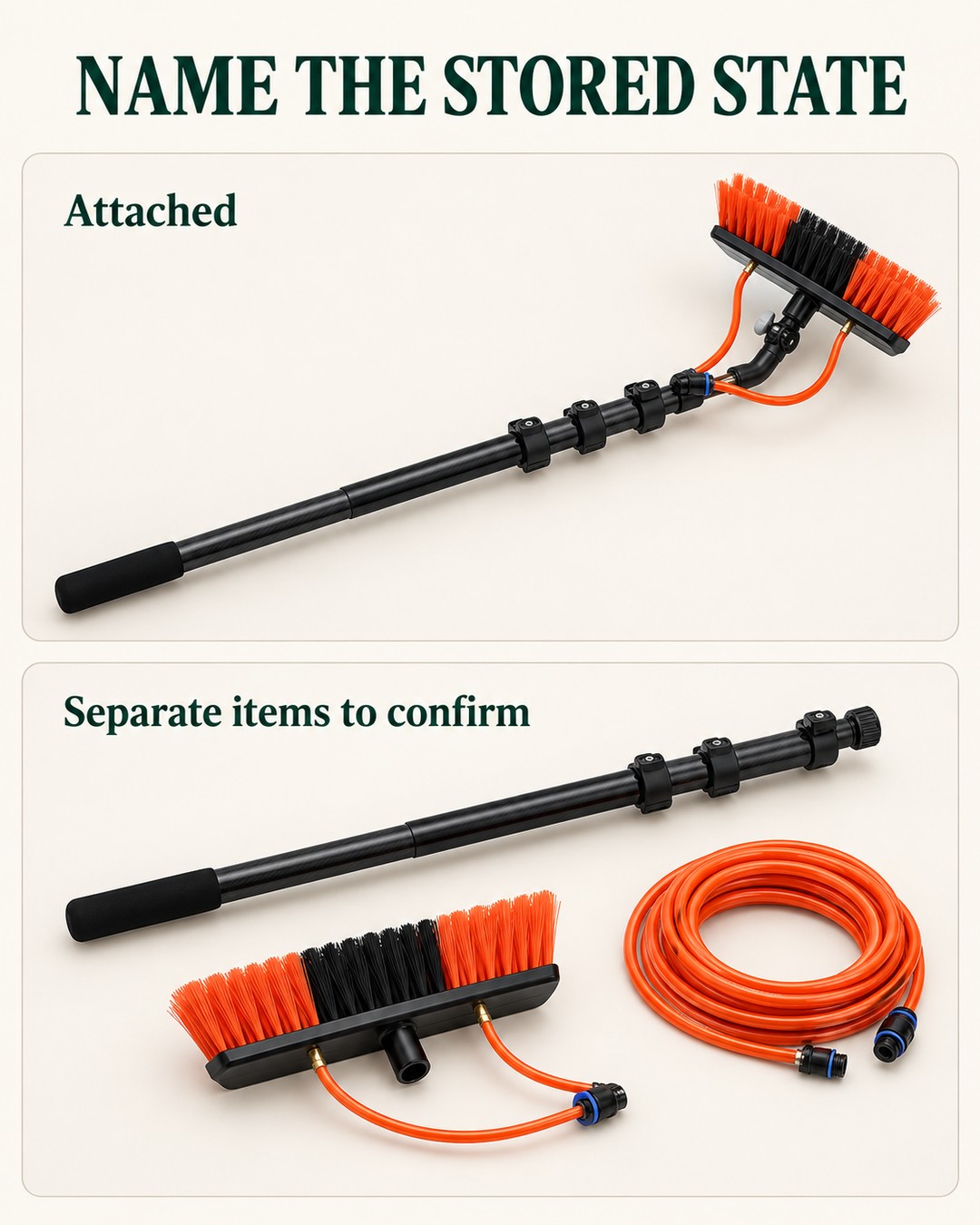
Identify the pole reference, sample and revision. List the brush, head adapter, tip, hose and other items that remain attached during storage. Note protruding clamps and fittings rather than describing only the tube. Keep a marked view of that arrangement with the record.
If the proposal stores a head or accessory separately, obtain confirmation that this is a permitted configuration and identify the applicable instructions. Do not assume every pole can be shortened by removing a section or fitting. The brush-connection guide covers the separate mechanical and water-path questions.
Tucker’s 40 Water Fed Pole listing publishes collapsed and extended dimensions separately and itemizes the brush, tubing and fittings. These are useful supplier fields, but the listing’s dimensions and components belong to that product. They do not define a CFW assembly or establish the stored condition of another pole.
Check the opening as well as the interior
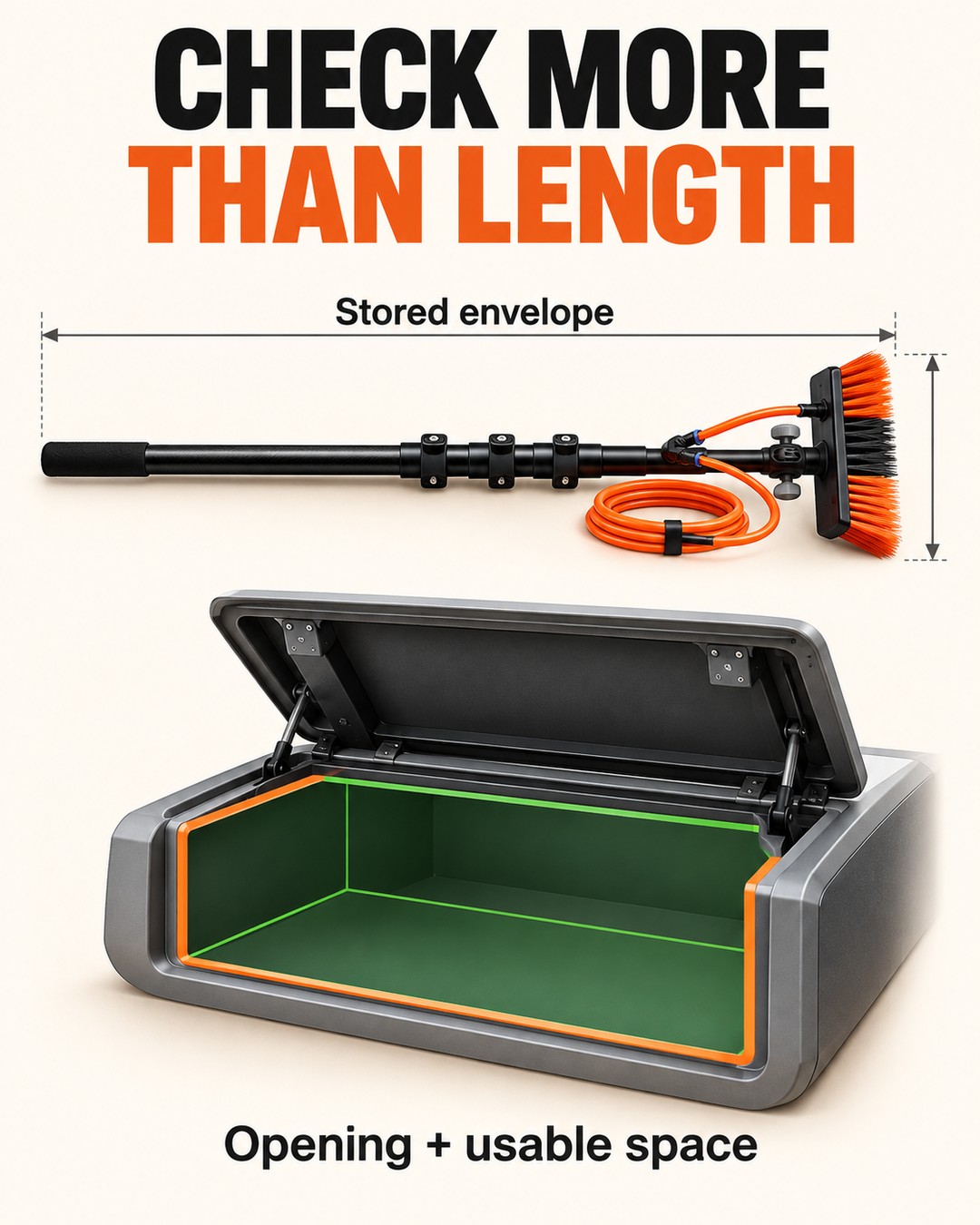
The assembly needs space in its intended resting position and a way to reach that position. Record the relevant overall length, maximum width and depth of the stored configuration. Identify which head, clamp or fitting creates each limiting projection.
Describe the usable interior separately from the opening and closure. A long compartment may have a narrower entrance. A bag’s empty, flat dimensions do not establish its usable internal shape with equipment inside.
WindowCleaner.com’s XERO Pole Storage Bag page distinguishes its empty-flat dimensions from its stated collapsed-pole accommodation. It also identifies side pockets for brushes or hose attachments and lists particular poles. Those statements describe that seller’s bag; they are not a universal clearance rule or evidence that a CFW pole fits it.
Ask for the constraints that matter to the proposed pair: the opening, usable space, closure path and any internal divider or support. Keep units consistent. A photograph can locate an obstruction, but cannot replace an unrecorded dimension.
Use one transport-fit record for the proposed pair
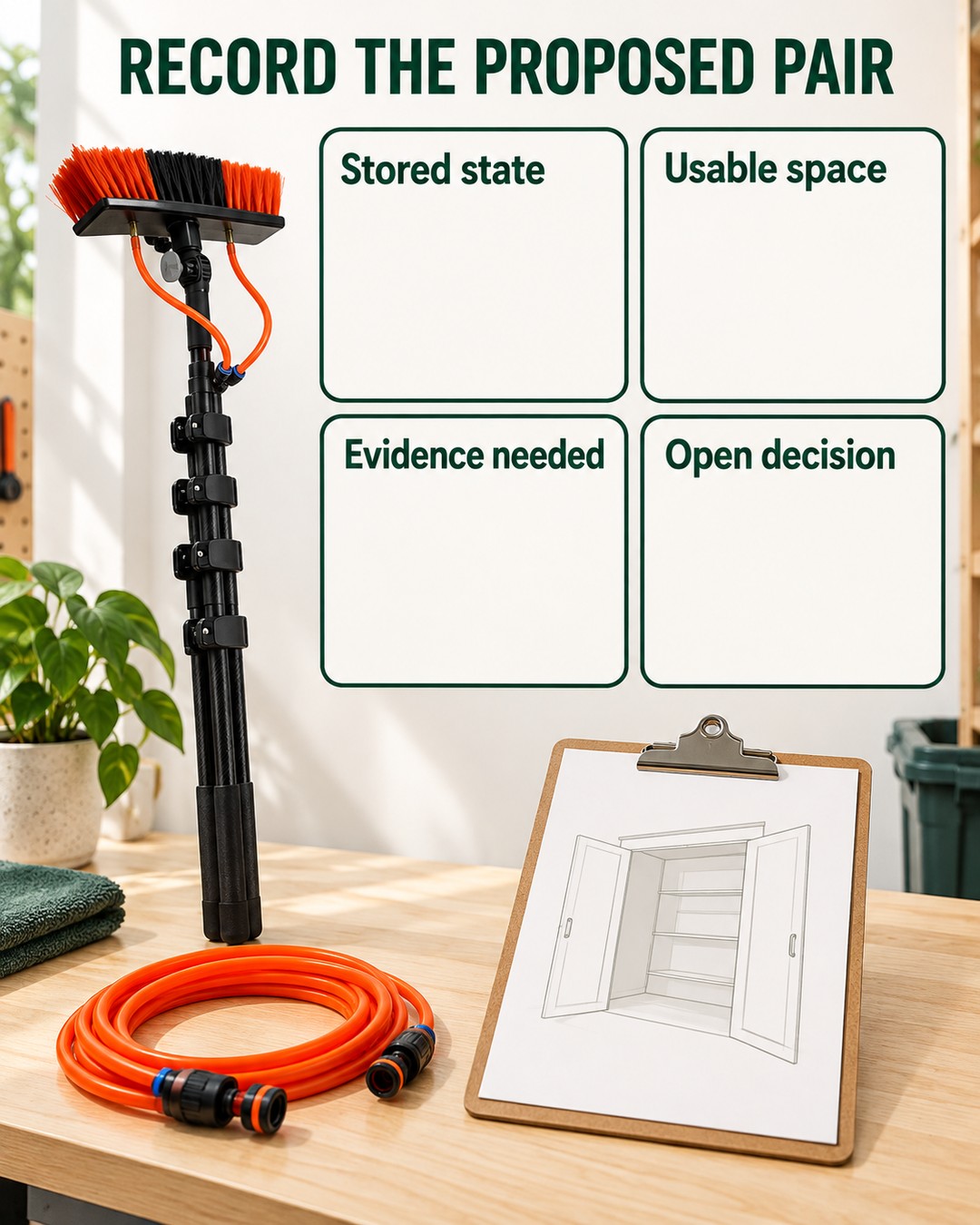
The following blank record is an original buyer-planning aid. Complete it with the supplier’s response and actual evidence. An unanswered field remains unresolved; it is not a successful fit result.
| Field | Define for the arrangement | Evidence or open decision |
|---|---|---|
| Identity | Pole configuration, sample and revision; bag, rack or compartment reference. | Which exact pair is being considered? |
| Stored state | Attached head, adapter, hose and protection; separately stored items. | Supplier-confirmed state and applicable instructions. |
| Assembly envelope | Overall length, width and depth where relevant; endpoints, protrusions and units. | Actual identified readings or dimensions still required. |
| Receiving space | Usable interior, restrictive opening and closure path. | Which constraint governs access or the resting position? |
| Separate contents | Each detached accessory, quantity and intended storage location. | Included, buyer-supplied or awaiting confirmation. |
| Paired check | Same-state entry, removal and closure review on identified equipment. | Observed condition, dated evidence or check still outstanding. |
| Decision and change owner | Accepted, revise or not verified; retained reference and responsible contact. | Open action and changes requiring another review. |
Resolve the arrangement before accepting a fit claim
Consider a hypothetical quotation that provides a collapsed length but leaves the attached brush and storage opening undefined. The buyer may complete the length comparison while keeping the overall transport-fit decision open. Request the missing state and space information instead of treating the length match as approval.
If a sample check is agreed, use the identified equipment in the proposed state. Record entry, removal and closure observations, including any contact or obstruction requiring review. Do not force an arrangement to obtain a favorable result. Retain the result against that pair and configuration.
A changed head, adapter, hose arrangement or storage divider may invalidate the earlier comparison. Record the change before carrying forward the decision. If clamps or sections change, use the reorder configuration guide as well. Physical fit does not establish protection in transit, load restraint or safe operating suitability.
Send a configuration-specific CFW enquiry
The current CFW-2930 water-fed cleaning pole listing asks buyers to define transport length and the brush, hose and connection package. Extended and collapsed dimensions are specified through the enquiry. The page does not establish a ready-made fit with a particular bag, rack or vehicle.
Send the pole reference, proposed stored state, relevant storage constraints, required accessories, quantity and destination. Identify which storage equipment you already own and the sample evidence you want discussed. Mark requirements separately from proposals and ask CFW to confirm the offered scope.
Request a CFW-2930 quotation for the proposed stored configuration. Identify the drawings or photographs in your message and agree how to provide them. Keep unresolved transport-fit items visible until the responsible parties confirm the arrangement.
Product and supplier information checked 30 October 2026. The record and hypothetical example are original editorial synthesis. All accompanying generated images are editorial illustrations of generic equipment, not photographs of an exact CFW model, measured fit, test result or completed customer project.