
Carbon Fiber Parts Packing Brief: A Buyer Checklist
A buyer checklist for linking protected surfaces, part identity, pack quantities and receiving records in an order-specific packing brief.

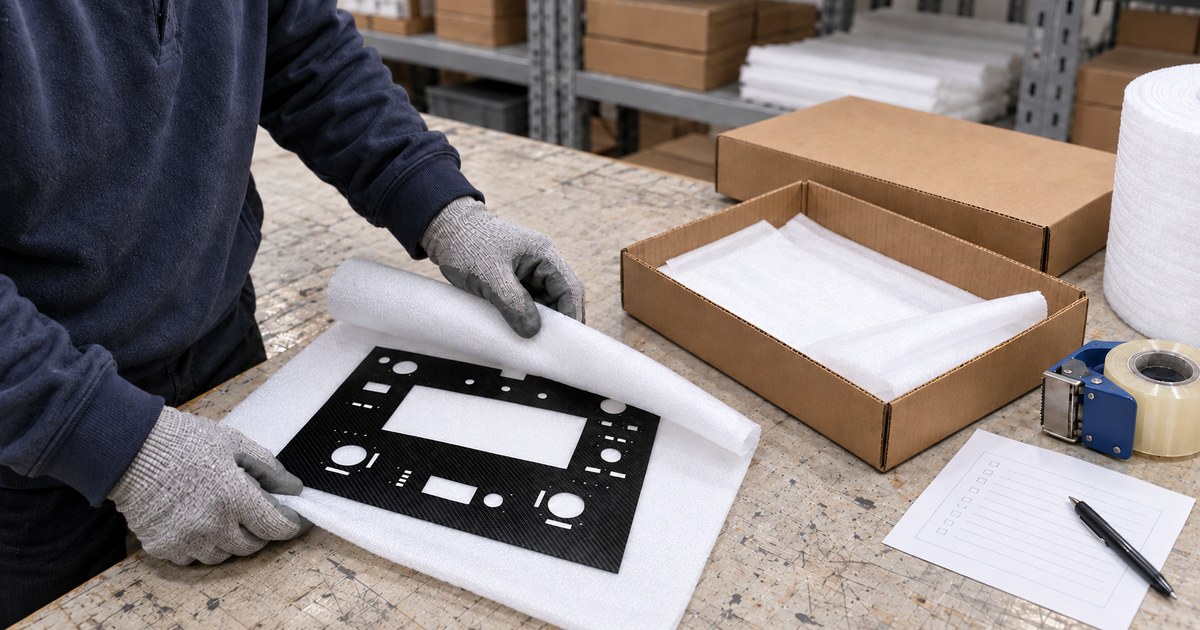
A useful carbon fiber parts packing brief defines three things before the order is released: the condition to protect, the identity of the contents, and the information the receiving team needs. Record those decisions alongside the drawing and quantity. Do not leave the packing team to infer them from a product photograph or a general request to “pack carefully.”
This checklist is for buyers of drawing-led flat components, such as CFW-2795 custom carbon fiber CNC-cut parts. It helps organize a discussion with the supplier; the final packing method and acceptance requirements still need agreement for the actual order.
Start with the part and the receiving task
Identify whether the shipment contains one component type, several separate part numbers, or a defined set. Then state how the buyer will receive it: count individual components, check complete sets, or distribute identified cartons to different locations. These choices affect the information that belongs on inner packs and the packing list.
For a custom flat profile, the agreed drawing defines the outline, holes, thickness and other requirements. A similar-looking part is not enough to establish the correct revision. Keep the current drawing reference with the packing brief, and name the person who can approve a proposed change.
Define which faces and features need protection
Mark cosmetic faces, finished edges, protruding features and contact-sensitive areas on a drawing or reference image. Explain the condition the buyer wants to preserve, rather than prescribing an unverified packing material. For example, distinguish a visible face that must avoid rubbing from a fit-critical edge that must not receive adhesive residue.
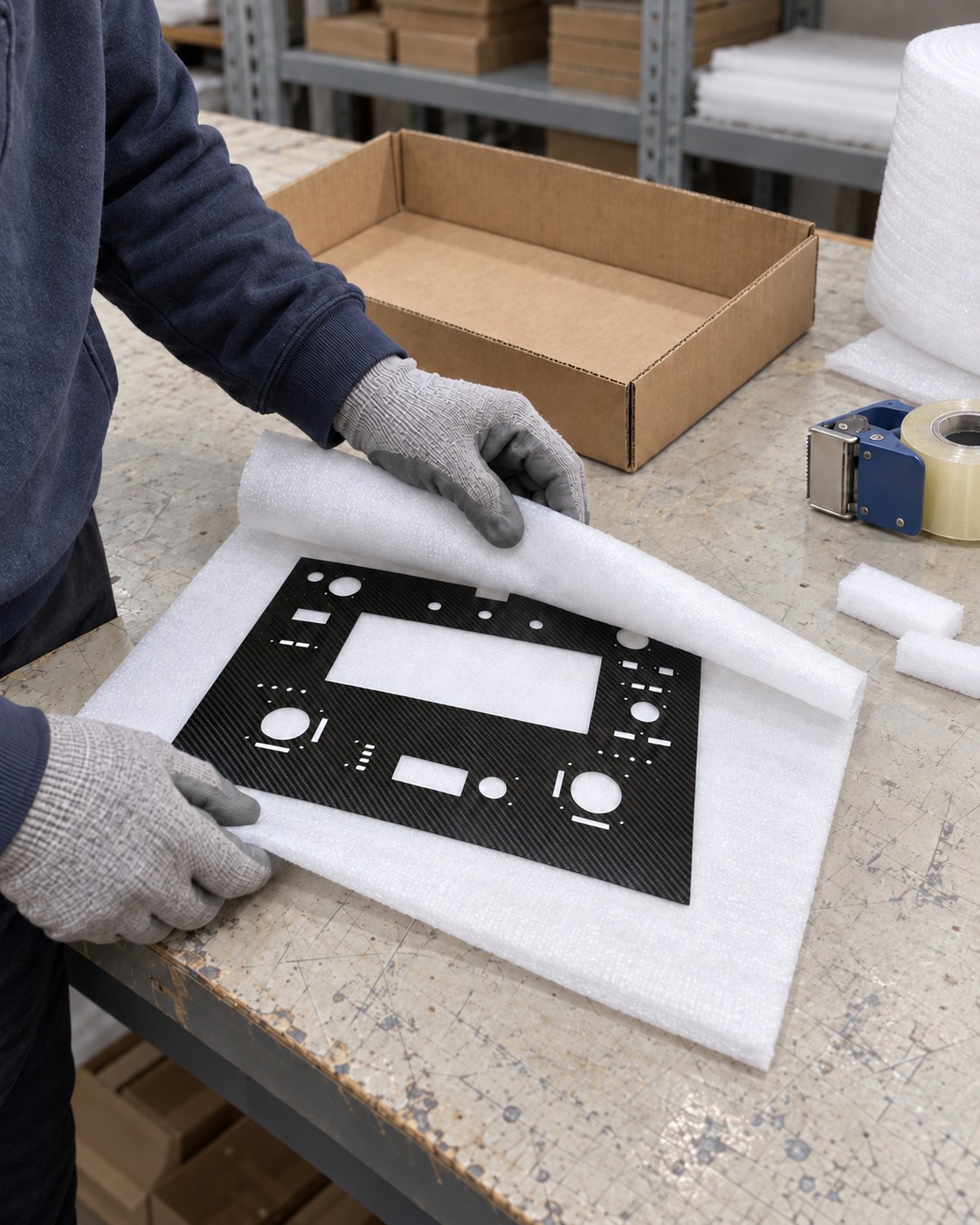
Ask the supplier to propose suitable separation, support and outer packaging for the geometry, contents and intended route. If film, bags, interleaves or other materials contact the part, confirm their suitability for the agreed surface and any removal requirements.
DHL Express packing guidance recommends protecting and separating multiple items and controlling movement inside a parcel. That is general carrier guidance, not validation of a particular carbon fiber package. This checklist does not assign a universal foam thickness, carton grade or tested protection level.
Give PART, REV and QTY a defined meaning
A compact label works only when its fields are unambiguous. Agree the wording before packing:
- PART: the component identifier or agreed set reference, not just “carbon fiber parts.”
- REV: the drawing or specification revision that controls those contents. A label revision and a part revision are different records.
- QTY: the number and unit inside that identified pack. State whether it means components, sets or cartons.

For mixed parts or sets, define a contents list linking each component to its own reference and quantity. Add purchase-order, lot, barcode or carton-sequence fields only where the order or receiving process requires them. These are buyer brief fields, not a universal label standard.
Keep component identification separate from the carrier’s shipping label. One tells the receiving team what is inside; the other identifies the transport destination and shipment. Neither replaces the other.
Agree the packing list and handoff records
Specify which records should accompany the shipment, what each record should identify, and when it should be provided. A packing list can link identified packs or cartons to quantities. An inspection record addresses the agreed checks. A packing photograph documents visible condition at the moment it was taken.
A photograph alone does not prove the count of hidden parts, dimensional conformity of every component or protection throughout transport. If package testing or a particular inspection record is required, agree its scope and evidence separately. The specification and inspection guide explains how to separate an agreed requirement from an actual result.
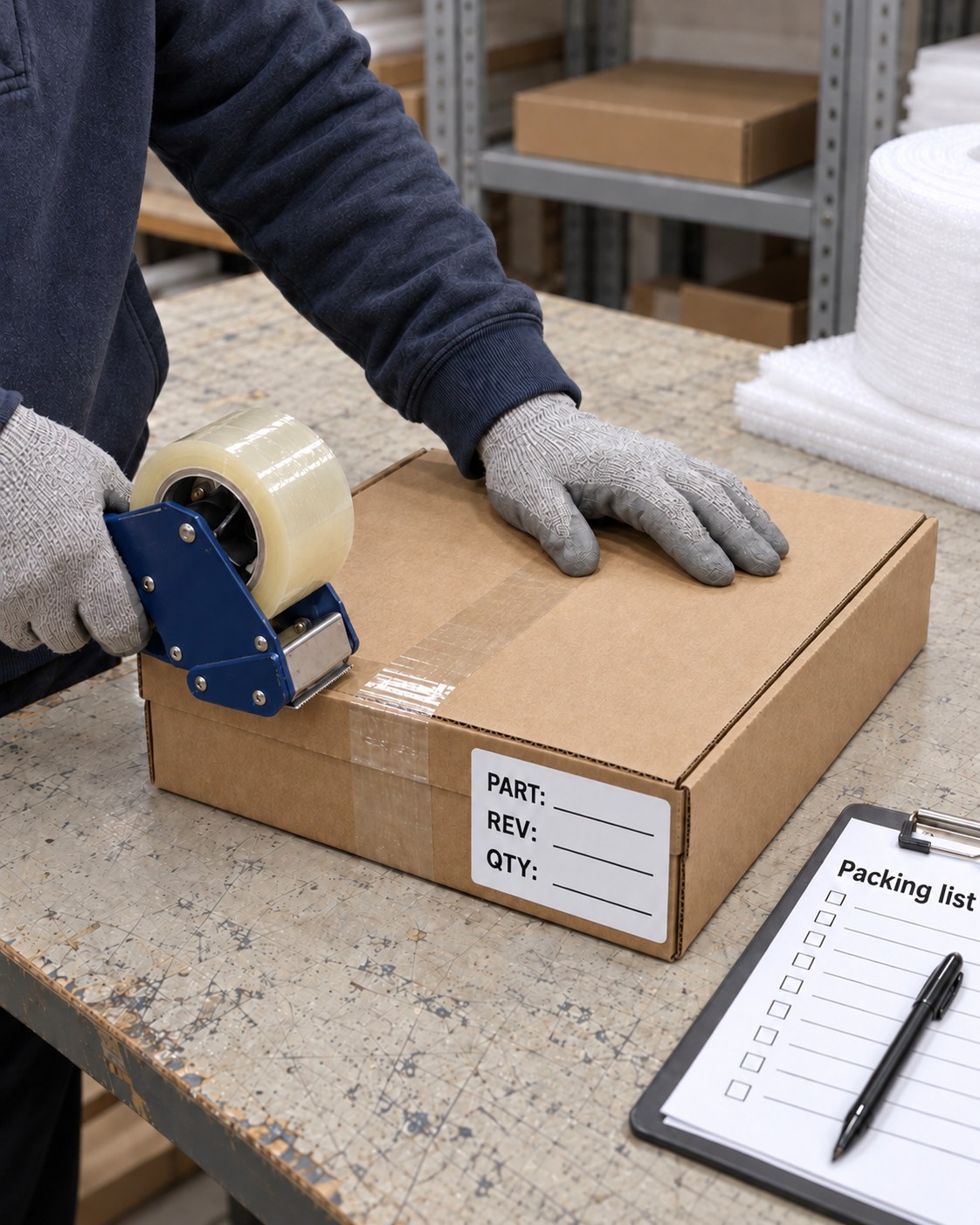
Provide the destination country, planned shipping mode if known, and any receiving-site rules. Ask which labels, documents, carton limits or handling requirements apply to that route. Check the selected carrier’s current instructions, such as the FedEx parcel packing guide, instead of treating one illustration as a complete packing recipe.
Copy this packing brief into your enquiry
Complete the relevant fields with project facts. Mark an undecided item “Open for review,” and distinguish a buyer requirement from a supplier proposal. The table is a planning aid, not a completed shipment or inspection record.
| Field | What to record |
|---|---|
| Part identity | Each component or set reference, current drawing/specification revision and purchase-order reference where applicable. |
| Quantity and unit | Total components or sets, intended quantity per inner pack/carton, and contents of each mixed set. |
| Protected condition | Visible faces, edges or features to protect; agreed appearance reference and contact/removal restrictions. |
| Packing arrangement | Individual or grouped packing; proposed separation/support; any agreed package design or approval reference. |
| Identification | Inner and outer label text, PART/REV/QTY meanings, barcode or carton sequence if required, and label location. |
| Destination and receiving | Country, receiving location, planned shipping mode and site-specific handling or carton requirements. |
| Requested records | Packing-list fields, requested photos or inspection evidence, responsible person and handoff timing. |
| Approval and open items | Accepted requirements, unapproved proposals, unresolved questions and who approves changes. |
Keep the packing brief with the approved order
Before packing begins, compare the agreed brief with the current drawing, parts list and quantity. Resolve mismatched identifiers or units rather than silently choosing one. If the part revision, finish, packing arrangement or receiving rules change, record the change and confirm whether the existing packing instructions still apply.
For repeat purchases, retain the approved packing reference with the technical baseline. The repeat-order dimensions and surface-finish checklist covers that broader release decision. A previous packing photograph can be a reference, but it is not acceptance evidence for a new shipment.
Send the packing requirements with your project brief
Review the CFW manufacturing and handoff scope, then use the contact page to start your enquiry. Include your part reference, quantity, intended application, destination and completed packing notes. Send the current drawing by email using the contact details shown there. Identify the details that are requirements and those still open for discussion.
For drawing-led flat parts, include the reference CFW-2795 where relevant. Packing materials, scope of supply, requested records and timing are confirmed for the selected order; the scene illustrations do not show an actual shipment.