
Carbon Fiber Tube Finish: Mark the Functional Zones Before Approval
Specify visible, clamp-contact and bond areas separately on a carbon fiber tube. Agree the delivered finish, final fit and evidence before sample approval.

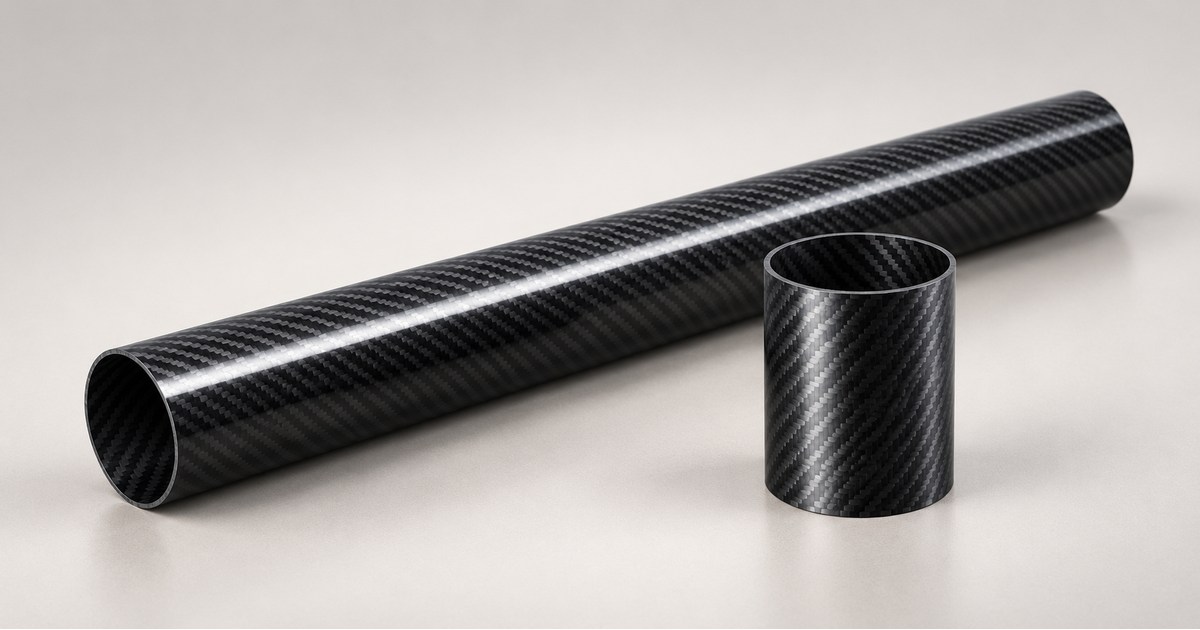
Specify a carbon fiber tube finish zone by zone. Mark the surfaces that remain visible, the areas that contact a clamp, and any area intended for adhesive. For each zone, agree the delivered surface state and the relevant dimensional or functional checks. A matte or gloss description alone does not establish bonding readiness, clamp performance, weather protection or finished fit.
This guide helps an OEM buyer prepare a surface specification for a drawing-led round-tube enquiry. It does not prescribe a sanding or bonding procedure. The selected construction, finish and acceptance requirements need project-specific agreement.
The tube visuals on this page are original editorial illustrations, not exact model photographs or measured results.
A finish name describes appearance, not the whole process
Two suppliers can use a similar appearance word for different surface states. Rock West’s tube-finish explanation distinguishes its unsanded cello-wrap gloss from a smooth matte sanded surface, and discusses changes to the outer surface and diameter. Easy Composites’ woven-finish tube description explains that its glossy appearance involves grinding, lacquer and polishing.
These are manufacturer-specific examples, not CFW process claims. They show why a photograph or the word “gloss” cannot identify the actual outer surface. Ask what will be delivered: the appearance, whether a coating is present, and any finishing operation included in the quotation. Keep the laminate requirement separate; visible weave does not define the complete wall construction.
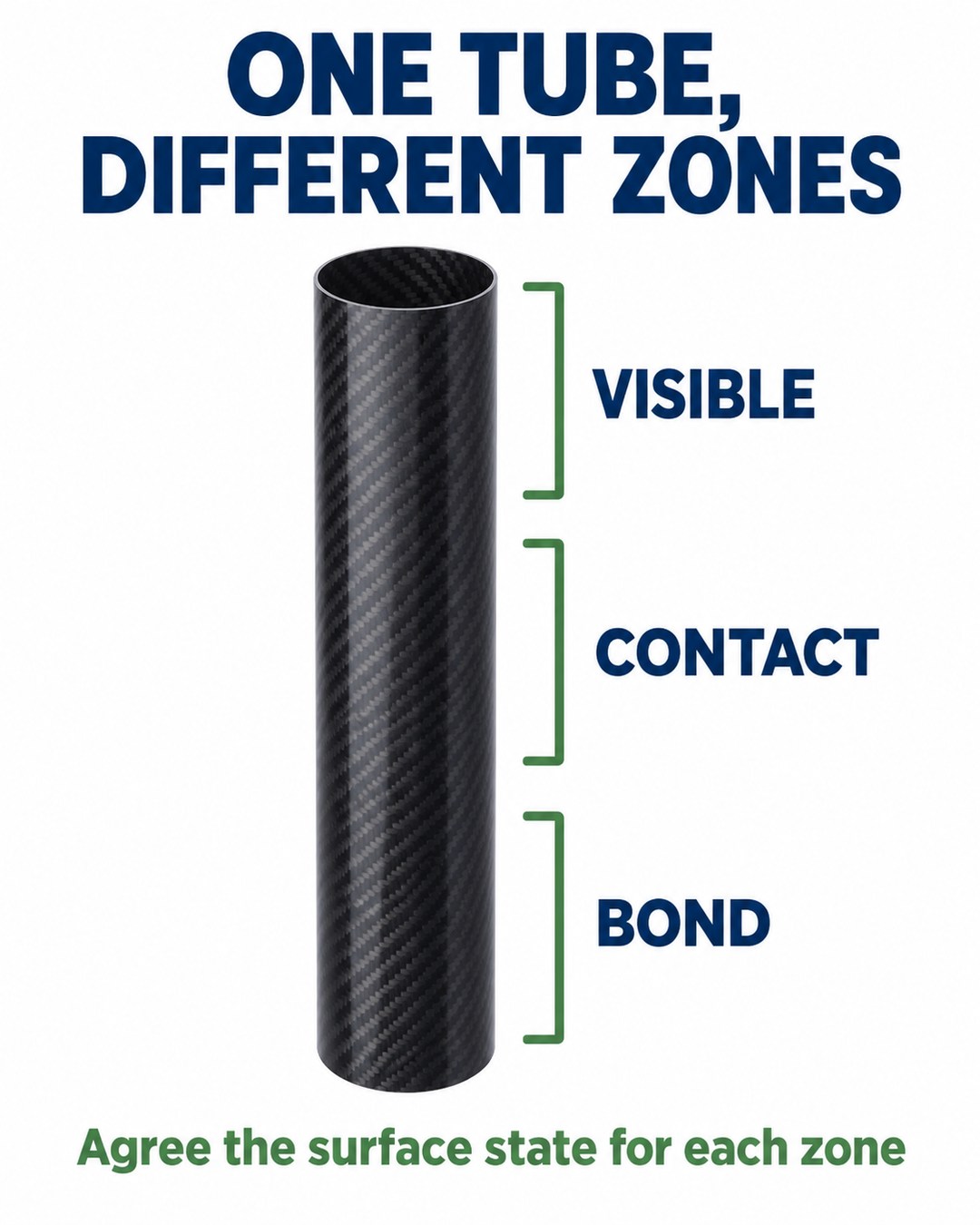
Mark visible, contact and bond areas separately
Use a marked sketch tied to the tube drawing revision. Name each zone, show where it starts and stops from a physical reference, and identify whether the requirement applies around the full circumference or to a particular side. Include overlapping requirements explicitly. A hidden clamp area may still have a fit requirement even when its appearance is unimportant.
Visible zone
Define the appearance reference, viewing conditions and acceptable variation. State whether the visible area ends at a cover, clamp edge or another named feature. If color or a coating matters, identify it as a requirement to confirm rather than assuming it from a glossy image.
Contact zone
Identify the actual clamp or mating component and the final surface it contacts. Record the critical outside diameter and the intended assembly check. Neither a matte look nor a glossy look proves holding performance; that depends on the agreed assembly and validation.
Bond zone
Identify the bonding area and who supplies it in which condition. Agree responsibility for any preparation, handling and subsequent bonding process with the appropriate technical owner. A cosmetic sample is not evidence of adhesive compatibility or joint strength. Use the separate bonded-insert joint brief when an insert forms part of the assembly.
Define the diameter in the delivered surface state
A fit requirement should say which surface condition is being accepted. Identify whether the specified outside diameter applies before or after the agreed finishing or coating, and where it is checked. Ask the supplier to confirm the proposed final state against the mating component before approving the sample.
Do not assign a generic allowance or remove material from a delivered tube to make an unspecified fit work. Resolve the drawing and finish requirements first. A catalogue nominal diameter, an unscaled image and a completed measurement are different kinds of information.
Use different evidence for appearance and function
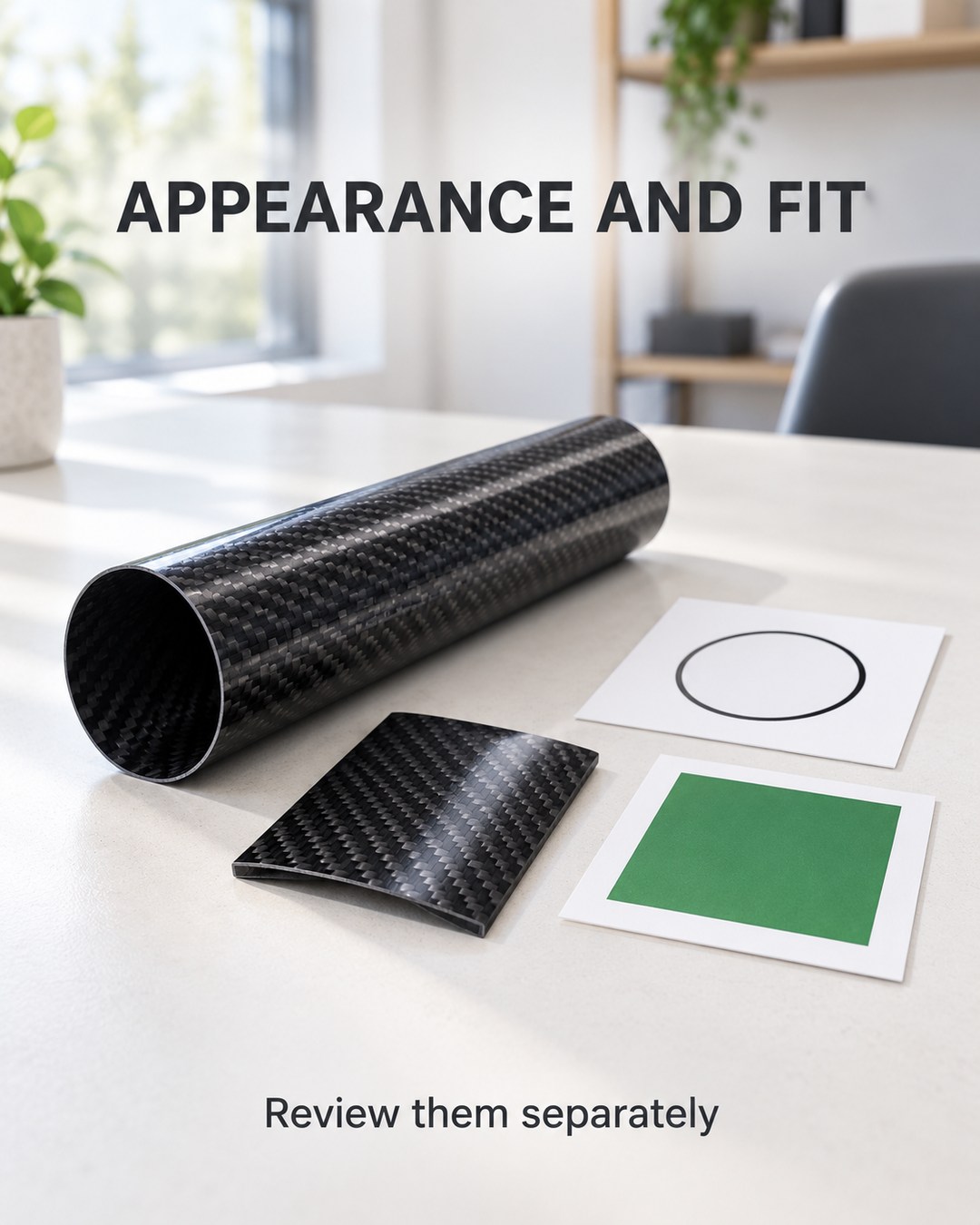
Review an appearance reference under agreed lighting and viewing conditions. Separately review fit against the named interface and final surface condition. For a bonded region, review the agreed preparation and validation evidence for that joint. Keep each result attached to the same sample identity and drawing revision; a pleasing visible finish cannot close an unresolved interface check.
A surface-zone record to attach to the enquiry
Use the following fields for each visible, contact or bond zone. This is an original planning record, not a completed inspection form. Leave unresolved requirements marked open until buyer and supplier agree them.
- Zone identity and boundary
- Zone name, drawing revision, reference end or feature, start/stop locations and circumferential extent.
- Delivered surface state
- Appearance reference and the proposed coating or preparation state, including which operations are included or excluded.
- Final geometry
- Relevant diameter or interface limit, the surface state to which it applies, and measurement locations.
- Acceptance evidence
- Appearance comparison, actual dimensional record, assembly check or joint validation required for that zone; identify the sample and method.
- Responsibility and open items
- Who supplies the surface, who performs later operations, who approves the evidence and which requirements remain unresolved.
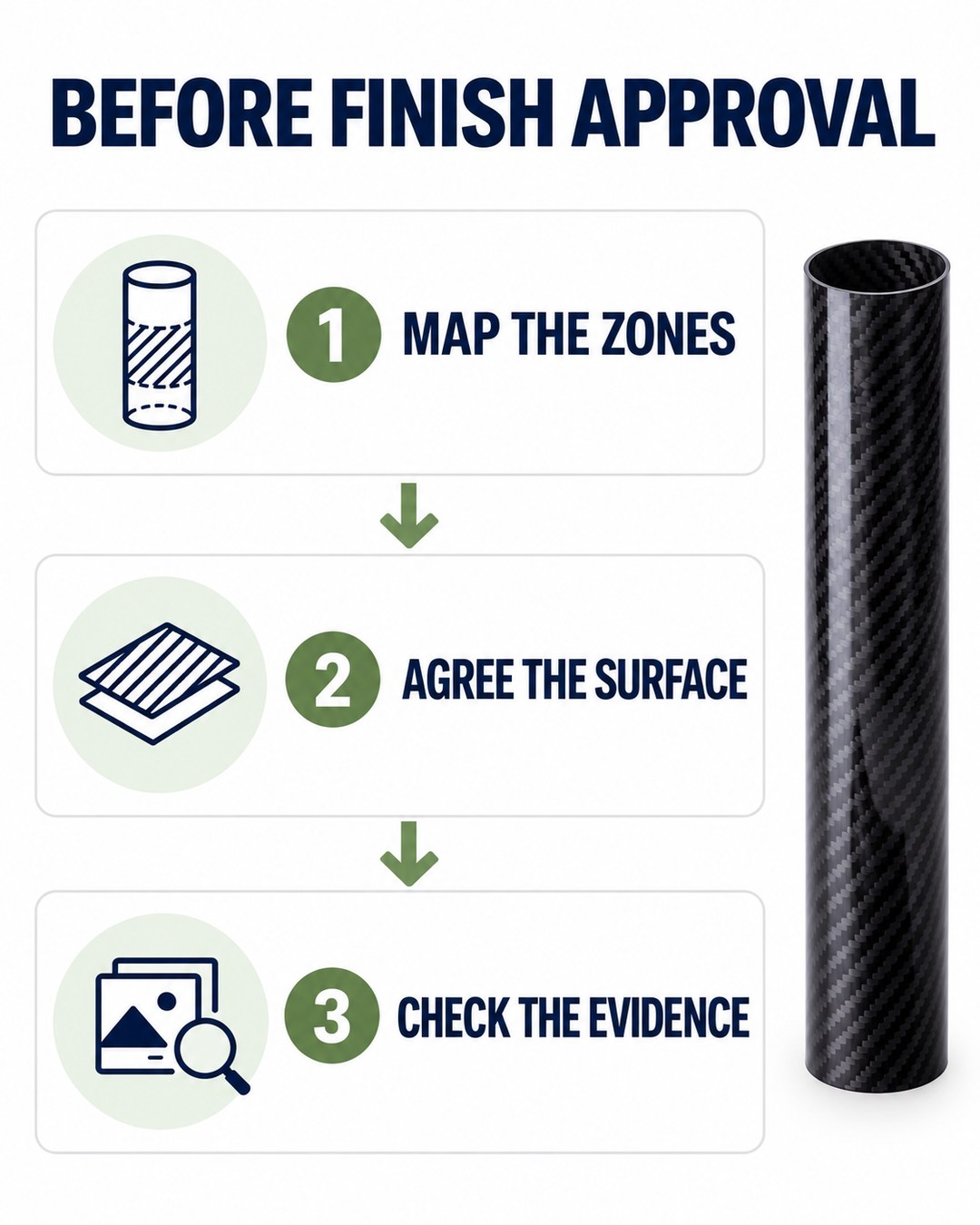
The release sequence is simple: map the zones, agree the delivered surface, then check the evidence that answers each requirement. The CFW specification and inspection guide explains how a published nominal value differs from an agreed requirement and an actual result.
Prepare a CFW round-tube enquiry
Use CFW-1798, Custom Round Carbon Fiber Tubes, as the enquiry route. Send the selected section dimensions, marked zone sketch, drawing revision, appearance reference, quantity and destination through the existing contact page. Ask CFW to confirm the achievable surface configuration, final-fit requirements and requested documentation with the quotation. A requested finish or check is not a guaranteed service until confirmed for the project.
Source-informed, AI-assisted purchasing guidance. The linked manufacturer explanations were reviewed on 15 October 2026 and are scoped to their own products. All four images are original editorial illustrations; they do not document CFW testing or a delivered model.