
Water-Fed Pole Transport Fit: Measure the Packed Assembly
Record the complete water-fed pole transport configuration, then compare its dimensions with vehicle entry, loading access and usable storage space.

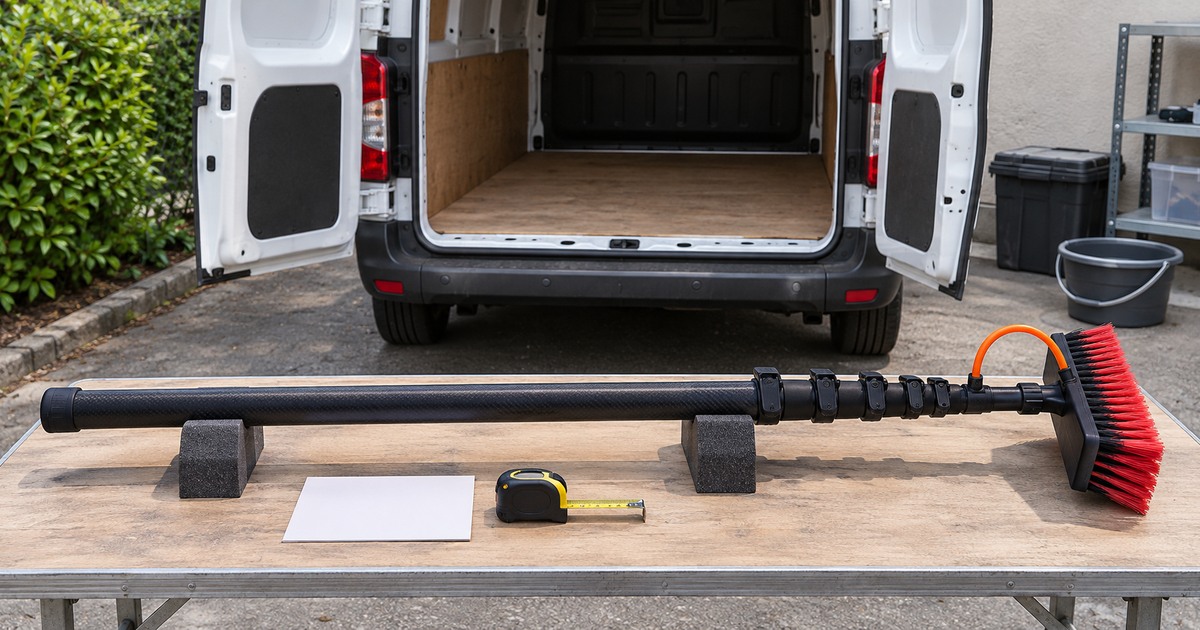
Original editorial planning illustrations; no measured vehicle-fit result.
For water-fed pole transport fit, measure the assembly you intend to carry: its overall length, width and height, with each retained part in its travel position. Compare that record with the vehicle’s opening, loading path and intended storage space. A pole’s working length, bare collapsed length and shipping-box length describe different things.
For cleaning-business buyers planning a vehicle loadout, the useful starting point is a named transport configuration. The record below helps a buyer and supplier discuss the same assembly before ordering. It is a planning tool, not a vehicle-fit test or a transport-safety approval.
Define what “packed assembly” means for your order
Use “packed assembly” here for the complete group you plan to load for daily travel, in its agreed transport arrangement. If you mean a delivery carton instead, label it separately. Keep three records distinct:
- Bare collapsed pole: the pole alone, with the sections retracted as specified and the measured endpoints identified.
- Daily transport assembly: the pole plus whichever attachments, covers or bags you intend to leave with it during travel.
- Shipping box: the external delivery package, including its packing materials and separately packed items.
A brush shown in a product image is not an itemised supply list. Equally, a shipping dimension does not tell you the dimensions of the arrangement your crew will carry between jobs. For working-length terminology, see the separate guide to sections, clamps and working reach.
Record the complete assembly’s outer dimensions
Agree the transport configuration before measuring it. Give it a simple identifier, list the parts included in the measurement, and note their positions. A supplier’s pole-only figure and your assembled equipment measurement should not share an unlabeled “length” field.
For this comparison record, identify the two furthest length endpoints and record overall length. Record the widest and highest extents in the intended travel orientation as well. State the units, measuring method, source and date. A photograph or sketch can identify what was measured; it does not replace the dimension record.
If you do not have the selected assembly available, request its dimensions for that exact configuration. Mark missing values “to be confirmed” rather than estimating them from a gallery image. Do not add an invented clearance allowance or treat this proposed recording method as a test standard.
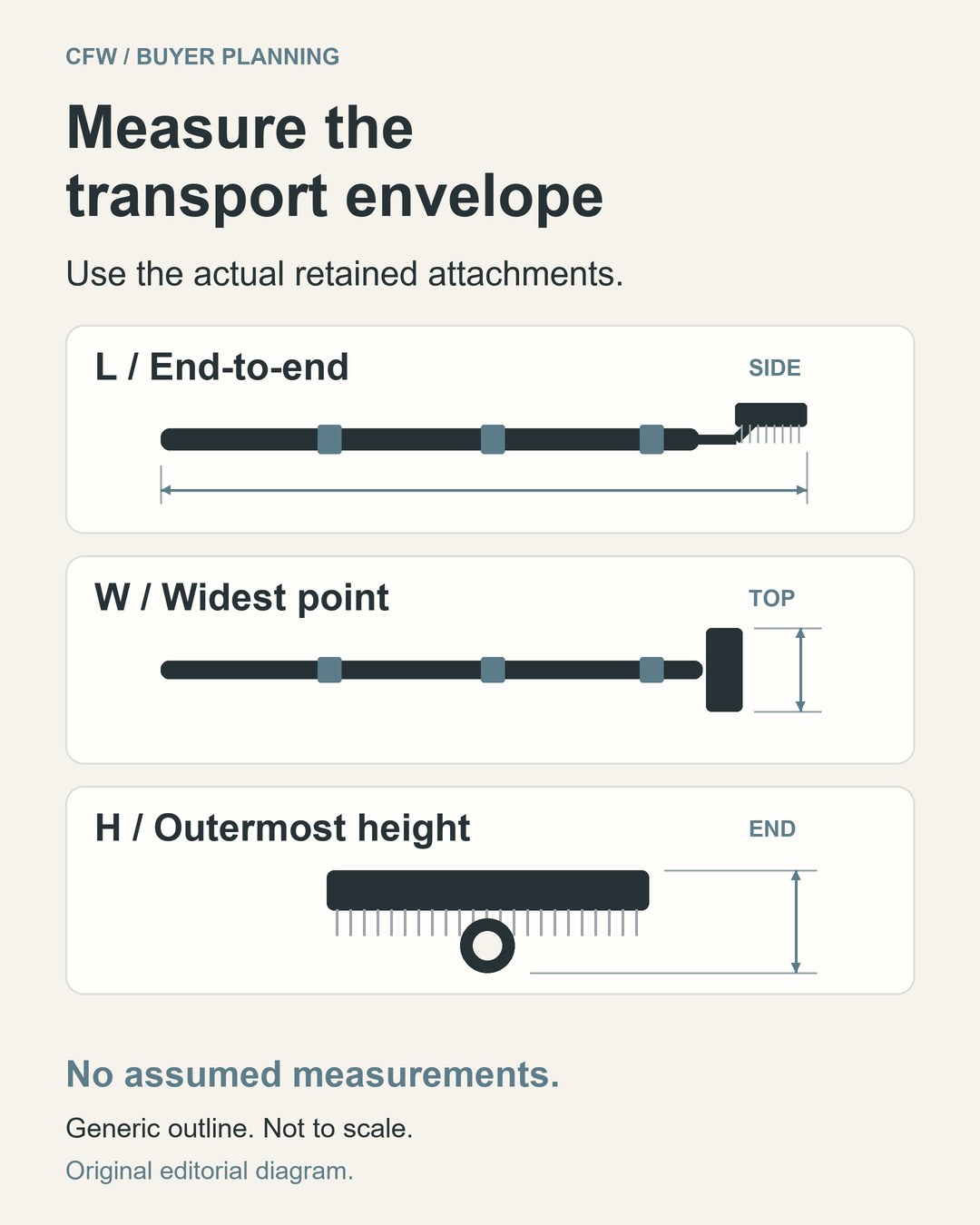
Check access as well as the final storage position
Separate the vehicle-entry check from the internal-space check. Interior length alone does not establish whether the assembly can pass through the opening and move into its intended position.
Record the vehicle model and relevant loadout, then identify the opening to be used, any restrictions along the loading path, and the usable storage space. Include existing partitions, racks or other equipment where they affect that route. Use actual vehicle information or measurements with a stated source; a generic vehicle category is not a fit result.
A diagonal measurement by itself does not resolve the entry and turning questions. If access cannot be established from the records, leave fit unconfirmed and identify the physical check still needed. Follow the vehicle and equipment manufacturers’ transport instructions; this guide does not specify restraints, permitted loads or a safe storage arrangement.
Keep removed parts in the transport plan
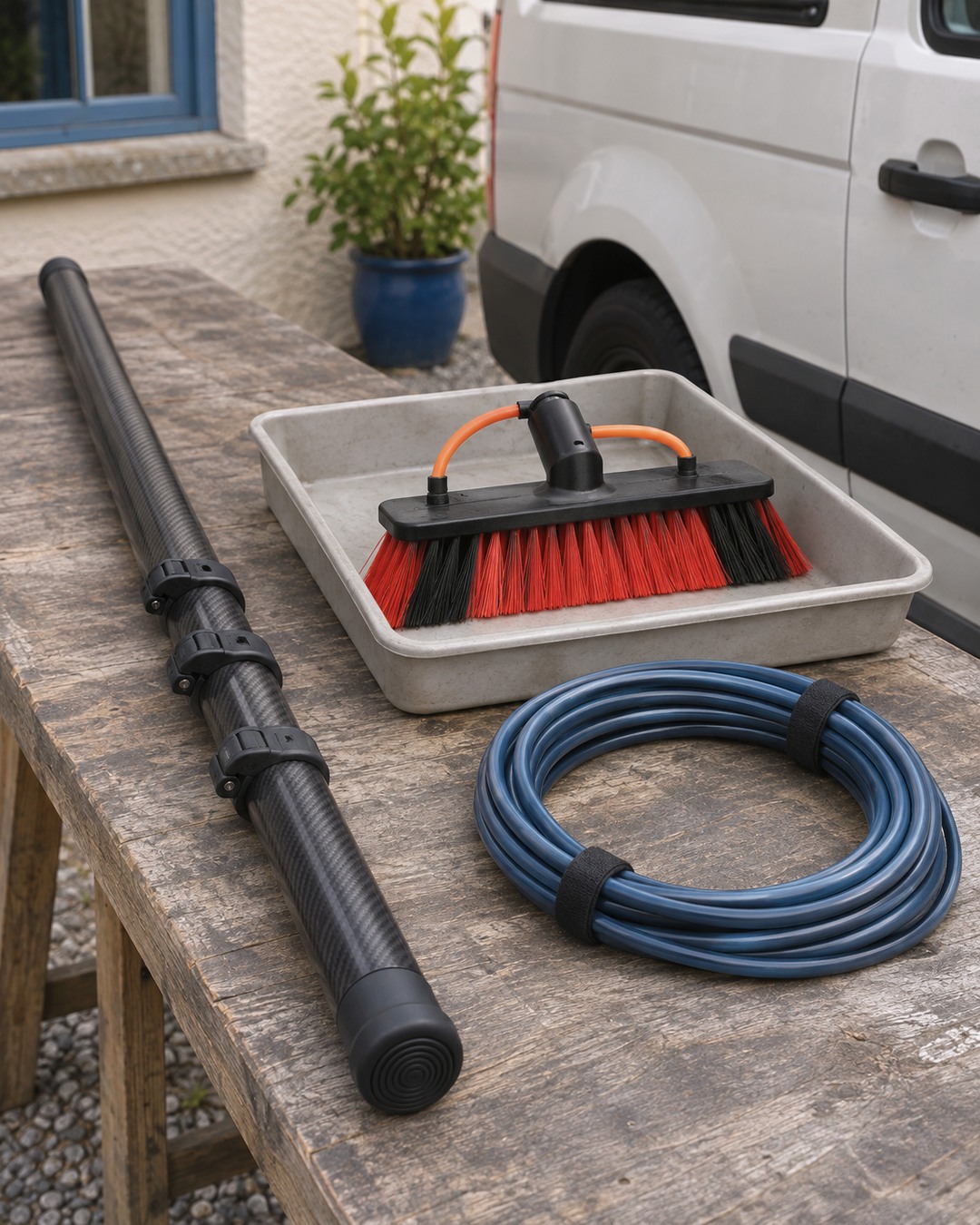
Where permitted by the equipment manufacturer’s instructions, record any proposed removal of a head or fitting for travel as a separate configuration. Note which part is removed, where it will travel, and whether its separate bag or container needs its own dimensions. Removing a component from the pole measurement should not remove it from the vehicle loadout.
The same applies if a hose will be carried separately or a cover will remain fitted. Describe the proposed arrangement without assuming those items are included in the order. Compare configurations using their recorded contents and measurements, not an unexplained “shorter” option. A change in the retained parts or their positions is a reason to revisit the record.
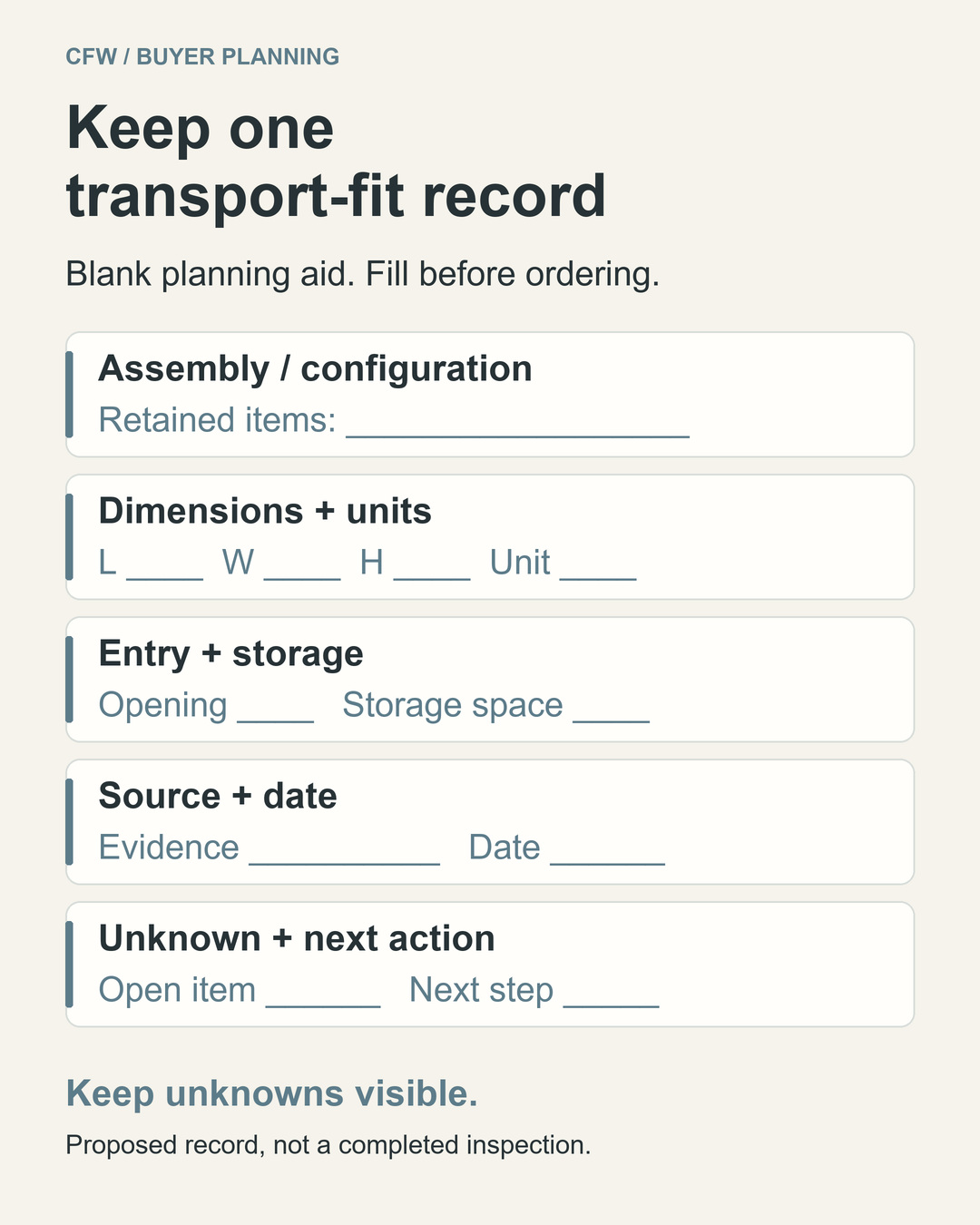
Use a transport configuration record
Copy these fields into your enquiry or purchasing notes. This is an editorial planning checklist, not a completed inspection record. Give each measurement a source and date; keep unknowns visible.
| Field | What to record |
|---|---|
| Configuration ID | Product reference, record revision and intended daily transport arrangement. |
| Assembly contents | Retained parts and their positions; removed parts and separate containers. |
| Overall dimensions | Length, width and height, units, orientation and identified endpoints. |
| Entry and loading path | Vehicle/loadout identity, opening constraints and restrictions on movement into position. |
| Internal storage space | Intended position and usable-space constraints for the same vehicle configuration. |
| Evidence | Source, measurement method, date and any identifying photograph or drawing reference. |
| Unknowns | Missing dimensions, unclear contents or access questions still unresolved. |
| Next action | Who will supply the missing information or check the selected assembly and vehicle. |
Send the record with a configuration-led enquiry
CFW’s Carbon Fiber Water-Fed Cleaning Pole listing asks buyers to specify extended and collapsed lengths; brushes, hose and fittings are itemised in the quotation. It does not supply a confirmed transport envelope for your chosen assembly or vehicle.
When preparing an enquiry, quote CFW-2930, identify the proposed travel configuration and share the dimensions already known, unresolved vehicle constraints, quantity and destination. Keep the supply list, daily transport record and shipping-package request separately labelled. Send your water-fed pole requirements and transport questions through the contact form.