
Carbon Arrow Spine Specifications: Define the Test Basis
Define a carbon arrow spine requirement with the measurement method, sample identity and acceptance evidence before comparing OEM quotes or approving a sample.

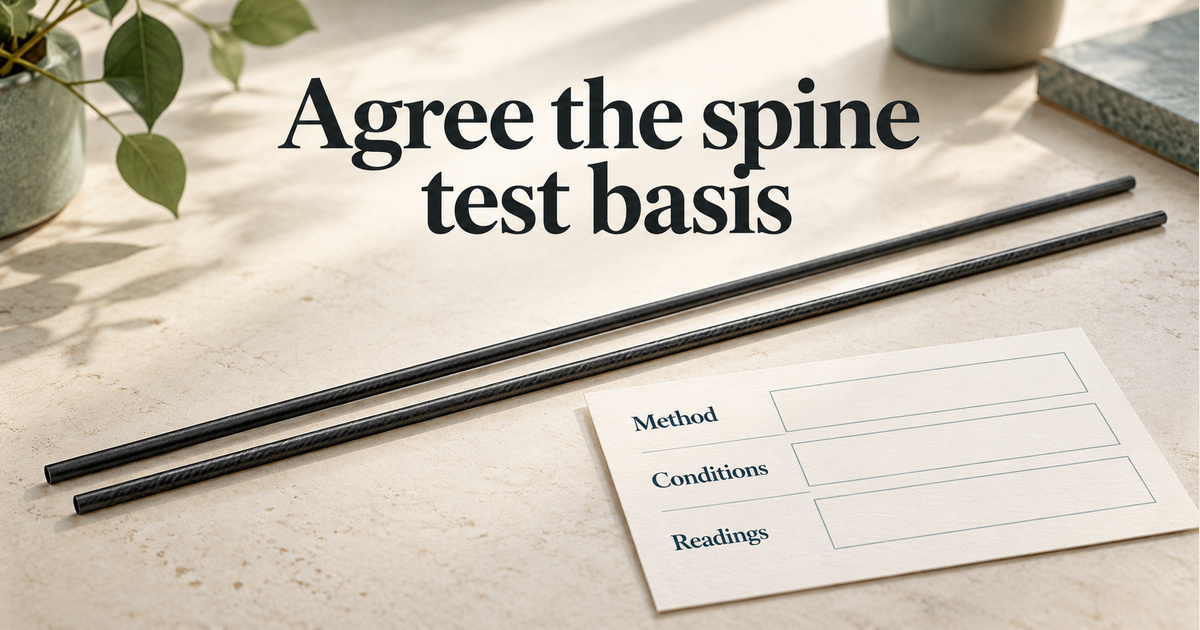
A carbon arrow spine requirement needs a stated measurement basis and evidence tied to the proposed shaft. Put the reported label, method, units and sample identity together before comparing OEM quotations. A matching number alone does not establish that two suppliers are describing the same measurement or agreeing to the same acceptance requirement.
This guide is for target-archery distributors and private-label buyers preparing a specification or sample review. It provides a procurement record, not an arrow-selection chart, a do-it-yourself test procedure or confirmation that an arrow is suitable for a particular bow.
Read the spine label with its stated convention
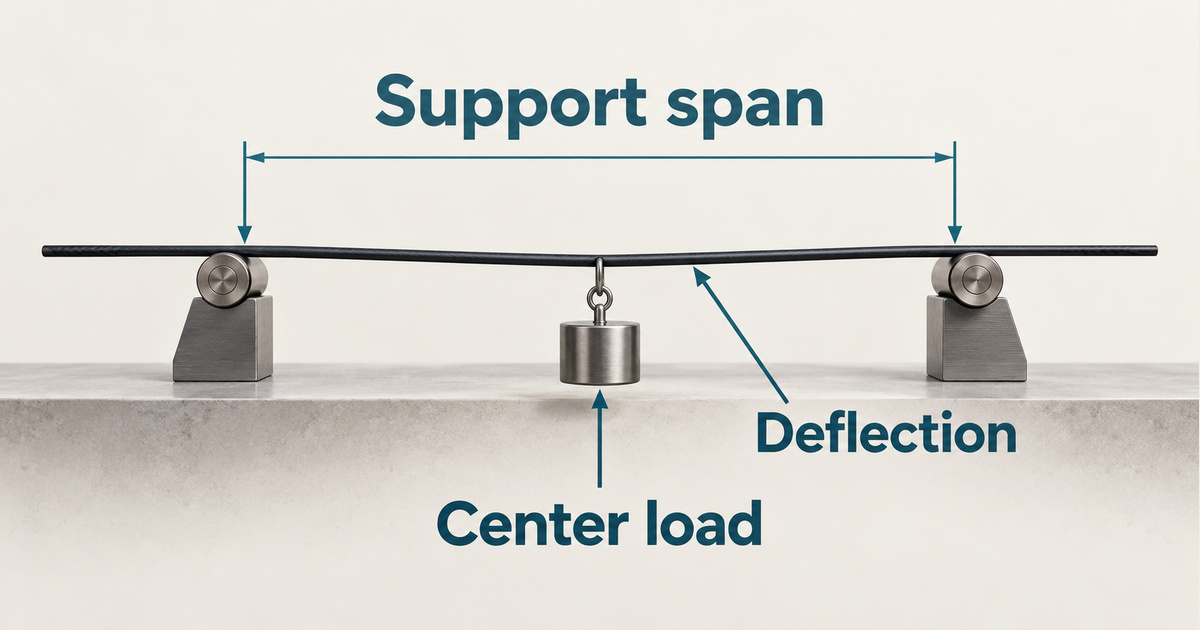
Easton’s spine explanation describes static spine using a 29-inch shaft supported over a 28-inch span, with an 880 g (1.94 lb) load at the center. In that convention, deflection in inches multiplied by 1,000 gives the spine designation: 0.500 in corresponds to 500. These figures explain the stated convention. They are not a CFW test result, an order tolerance or a claim that every supplier has used that procedure.
Gold Tip’s guide to arrow numbers distinguishes spine, marked SP, from straightness, marked STR. Its explanation associates a lower spine number with a stiffer shaft. Identify which attribute a number describes before transferring it into a purchase specification.
Keep the original unit and method beside the value. If a supplier uses a different label or reporting convention, ask for its definition. Do not silently convert an unexplained marking into a deflection reading, straightness limit or accepted performance claim.
Keep shaft stiffness separate from complete-arrow selection
A documented shaft-deflection requirement does not settle the complete arrow’s suitability for a bow. Easton distinguishes static spine from the arrow’s reaction during launch. Gold Tip also identifies draw weight, arrow length and point weight as relevant selection inputs. Use the applicable manufacturer’s current selection guidance for the intended equipment; a purchasing record cannot replace that decision.
Keep the two questions explicit in the inquiry: what shaft property and evidence must the supplier provide, and who will confirm the finished equipment configuration before use? Changing a component or configuration requires review of the affected requirement. Do not carry a previous acceptance across an unidentified change.
Other purchasing questions have their own records. The arrow-length guide defines measurement endpoints. The insert and nock fit guide deals with mating interfaces. Neither length nor component fit is established by a spine label.
Build a spine evidence record before comparing quotes
Use one record for each proposed shaft configuration. Separate the requirement, the supporting evidence and the disposition. Write not provided when information is missing, and identify the person who must resolve it. The table is an original buyer-side planning aid, not a completed inspection report or a statement of CFW’s available testing services.
| Record field | What to obtain | Decision before approval |
|---|---|---|
| Product and sample identity | Supplier reference, drawing or configuration revision, and the sample or lot identifier attached to the evidence. | Can the evidence be traced to the shaft being quoted? |
| Reported attribute and unit | The original spine label or measured value, its unit, and the supplier’s definition of the attribute. | Is this shaft stiffness information, rather than straightness or another property? |
| Method and version | The named procedure or manufacturer convention and its applicable revision or source. | Is the measurement basis identified well enough to compare the offers? |
| Specimen condition | The shaft configuration and length used for the reported measurement; identify whether the sample was bare or had components fitted. | Does the report describe the agreed specimen condition? |
| Measurement conditions | The support arrangement, applied load and other conditions required by the identified procedure, as recorded by the evidence provider. | Are missing or different conditions resolved before treating values as comparable? |
| Result and evidence | The actual result where supplied, its unit, measurement date and report or record reference. | Is a published label being kept separate from an actual sample reading? |
| Acceptance requirement | The buyer and supplier’s agreed criterion, sampling scope and decision rule, if required for the order. | Has the acceptance requirement been agreed, rather than inferred from a catalogue number? |
| Disposition and next action | Accepted, clarification required or not verified; responsible contact and the record that will close each open item. | Can the purchasing decision proceed, or must the evidence remain open? |
The person producing the evidence should identify the procedure and conditions actually used. This table does not prescribe a new fixture, sampling plan or pass limit. If the requested evidence is unavailable, agree how the requirement will be resolved before treating it as verified.
Resolve an identical label with a missing method
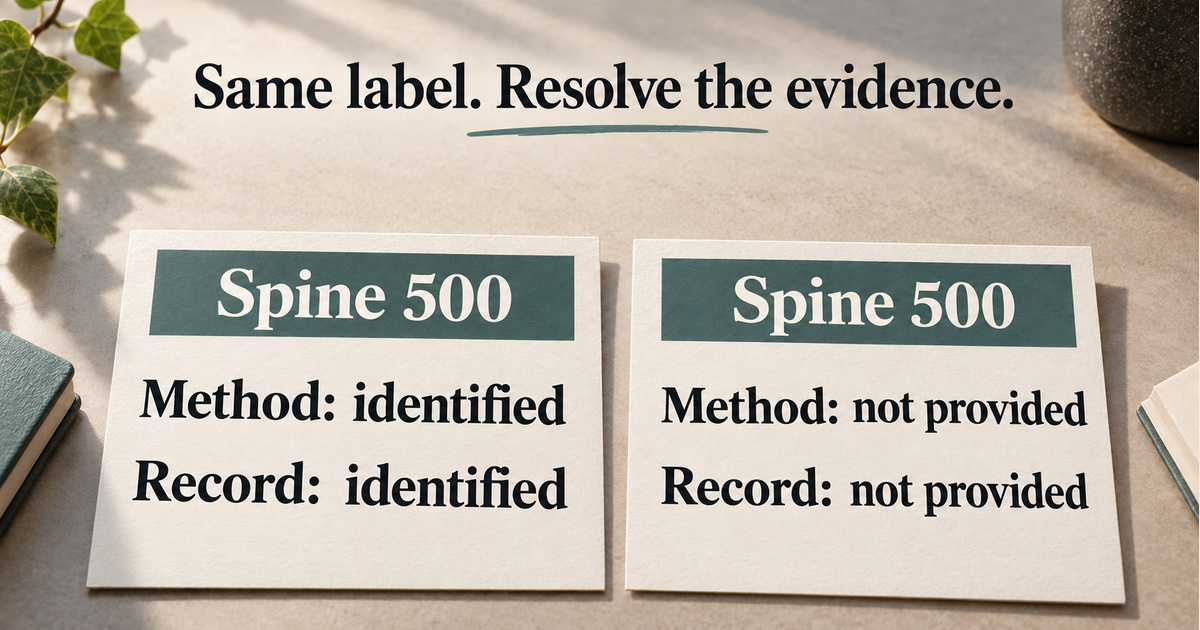
Consider a hypothetical buyer receiving two quotations that both say spine 500. One names its measurement basis and specimen condition; the other gives neither. The buyer has two matching labels and different amounts of supporting information. The second offer needs clarification before its value can be compared on the same basis.
Ask which convention and units govern the second offer, what specimen condition was used, and what supporting record can be supplied. Keep its evidence status open. Do not fill in Easton’s procedure merely because its published example uses the same number, and do not declare the first offer accepted solely because it contains more paperwork.
If both suppliers later identify the same method, continue checking sample identity, conditions and the agreed acceptance criterion. A defined method supports comparison; it does not establish that different shaft builds are interchangeable or suitable for the same equipment.
What the CFW-2810 listing establishes
The CFW-2810 carbon arrow reference lists carbon fiber, a 30 in shaft-length reference, 7.8 / 6.2 mm outside / inside diameter, and a spine label of 500. Those are published configuration references. The listed spine does not itself provide an identified sample reading, a test report or an acceptance tolerance.
Ask CFW to confirm the complete proposed configuration and supply scope, including the measurement basis and evidence required for your order. The manufacturer’s explanatory conventions cited above do not establish which procedure CFW uses or which reports CFW can supply. Those points need confirmation in the quotation and sample discussion.
Send the spine requirement with its evidence questions
For a CFW-2810 inquiry, include the product reference and intended target-archery setup, the required shaft configuration and length definition, the proposed spine requirement with its method or source, and any sample evidence already held. Add the evidence or acceptance criteria still to be agreed, required quantity and delivery destination.
Use the evidence record to distinguish confirmed requirements from open questions. State who will confirm the complete arrow’s suitability for the intended equipment. A spine requirement, dimensional requirement and component-fit requirement should remain separately identifiable even when they travel in the same order brief.

Send the CFW-2810 specification and open evidence questions to CarbonFiberWorld so the requested configuration and supply scope can be reviewed. Describe the record in the message. For drawings or CAD files, the contact page provides admin@carbonfiberworld.com; the form does not provide a file upload field.
Editorial responsibility: CarbonFiberWorld. Manufacturer explanations checked 22 October 2026. The record and hypothetical comparison are original editorial synthesis. Any accompanying generated visuals are illustrations, not photographs of a supplied CFW model, laboratory measurements, certifications or customer results.