
Replacement Event Flags: Match the Fabric to the Existing Pole
A buyer-side replacement-fit record for matching feather or teardrop event flag fabric to an identified existing pole.

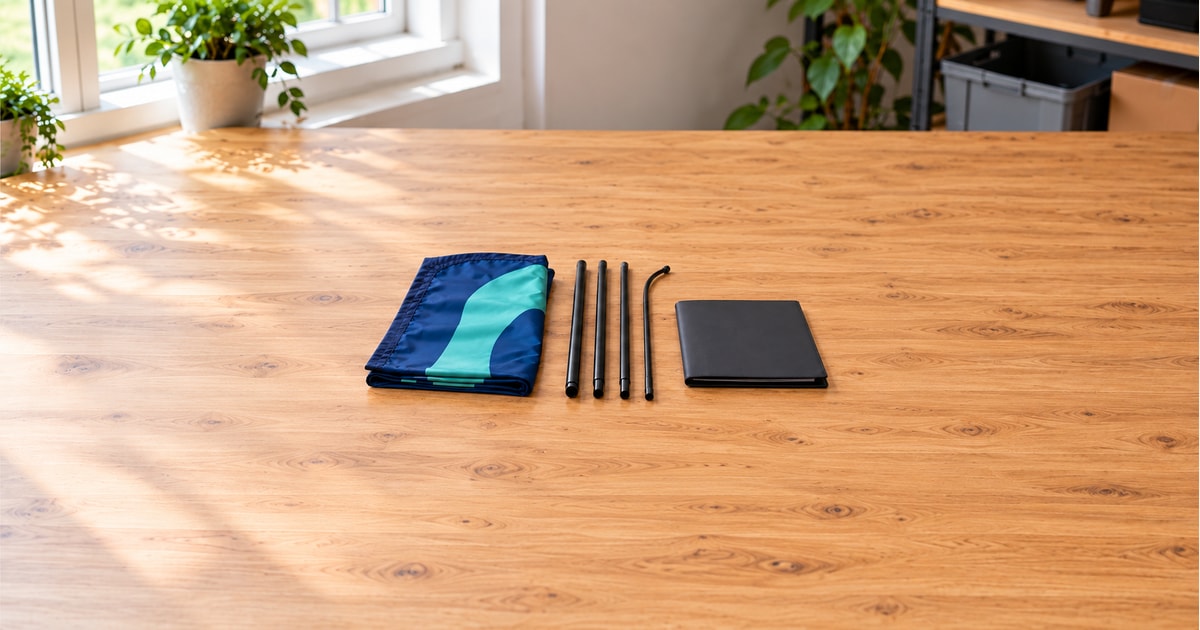
For a replacement feather or teardrop event flag, match the finished fabric to the exact pole being retained. Record the flag outline, pole-pocket route, reinforced tip and lower attachment before approving a reprint. A size name or the overall display height does not establish that a new flag will fit an existing pole.
This guide is for event suppliers, distributors and purchasing teams ordering replacement fabric. It provides a replacement-fit record and release decisions; it does not certify a mixed-brand assembly or replace the hardware manufacturer’s instructions.
Identify the display before ordering the fabric
Start with the original hardware brand, model, size code and purchase reference. Photograph the complete pole set and its upper section, then identify which flag previously belonged to it. If several sizes share a storage bag, separate and label the sets before asking a supplier to reproduce the fabric.
Cross-brand fit needs confirmation. Tex Visions explicitly cautions that its pole set may not fit flags from other vendors. That warning applies to its products; it is also a useful reason to request evidence for a proposed replacement rather than assume that two flags called “medium” share a pattern.
Keep three records separate: the hardware identity, the finished flag specification and the artwork revision. Changing only a logo can leave the physical specification unchanged. Changing the shape, pocket or construction requires another fit decision, even when the artwork is already approved.
Measure the finished flag with named endpoints
Ask the supplier which finished dimensions and measurement method it needs. A flag’s width and height, its curved pocket length and the assembled display height describe different things.
On a marked photo or agreed drawing, identify the pocket entrance, the end of the reinforced tip and the lower attachment point. State whether a length follows the sewn pocket path or is measured as a straight line between endpoints. Record the units and whether the fabric is lying flat or assembled according to the relevant instructions. Do not convert an unexplained size label into a manufacturing dimension.
An old flag is a reference, not automatic approval of a new pattern. Photograph damaged seams, repairs and an altered pocket separately. If the original flag is incomplete or the hardware identity is unknown, ask what additional reference or sample is needed before the replacement is released.
Check the pocket, tip and lower attachment together
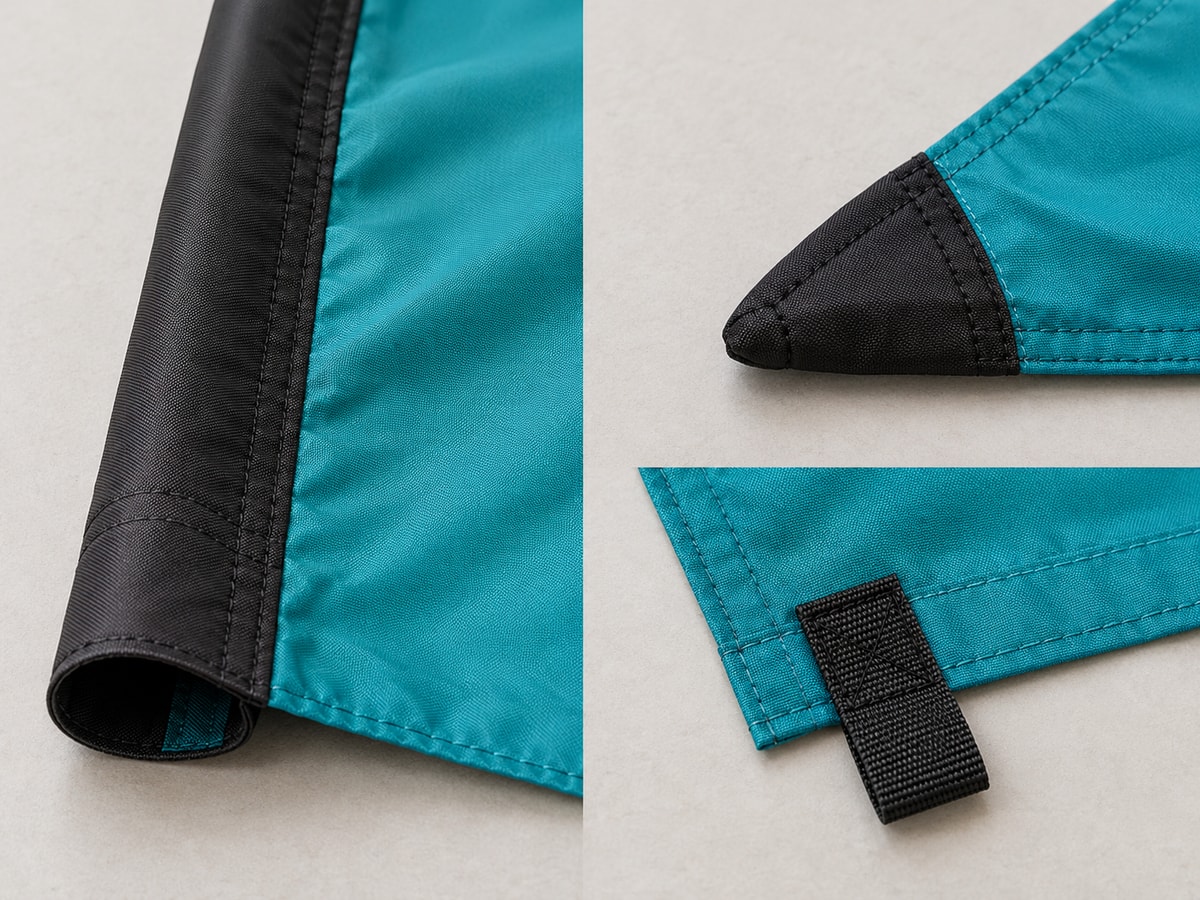
A pocket that accepts the pole at its entrance has not yet demonstrated the complete fit. Review the route to the upper tip and the way the flag is retained at the bottom, using the instructions for the identified system.
The model-specific Tex Visions “Feather Flag with Clamp” instructions, revision dated March 24, 2022, describe a reinforced upper pocket and a lower tab attached to a clamp. They also identify size-specific clamps. This is an example of several interfaces working together, not a universal construction requirement or an instruction for a CFW flag.
For procurement, photograph those interfaces on the actual reference assembly. Ask the replacement supplier to identify the proposed pocket construction, tip reinforcement and lower retention arrangement in the quotation or sample record. Do not invent a pocket-width allowance, shorten a pole or move a fixing to make an unconfirmed replacement fit.
Use one replacement-fit record
The following record is an original buyer-side checklist. It combines the evidence needed to make a replacement decision; it is not a test result, engineering standard or claim that CFW has inspected your hardware.
| Record | What the buyer should identify | Decision before release |
|---|---|---|
| Retained pole | Brand, model, size code, section set and relevant instructions. | Confirm the exact hardware reference; hold if sections or identity are uncertain. |
| Finished outline | Flag shape, finished dimensions, units and an agreed reference drawing or intact sample. | Confirm the intended outline; do not approve from an overall display-height label. |
| Pocket route | Entrance, sewn path and endpoint, with the agreed flat or assembled measurement method. | Resolve missing endpoints or an unexplained straight-line versus curved-path length. |
| Upper tip | Reference tip detail and the proposed reinforcement and termination. | Have the supplier address the matching interface; a visible pole entrance alone is insufficient. |
| Lower retention | Actual tab, loop, hook or clamp arrangement and its location on the identified system. | Confirm the proposed attachment; do not assume it transfers from another flag shape. |
| Print construction | Agreed fabric and single-reverse or double-sided configuration, as applicable. | Identify changes for supplier review; artwork approval does not approve a construction change. |
| Replacement scope | Fabric only or an itemized package, quantity, artwork revision and destination. | List included items and unresolved fit questions in the quotation. |
Give the record a reference and revision. Retain the marked photos with it so that “same as last time” refers to a particular flag-and-pole combination. Where a field is not verified, write that explicitly and name the evidence still needed.
Choose a repeat order or a new fit review
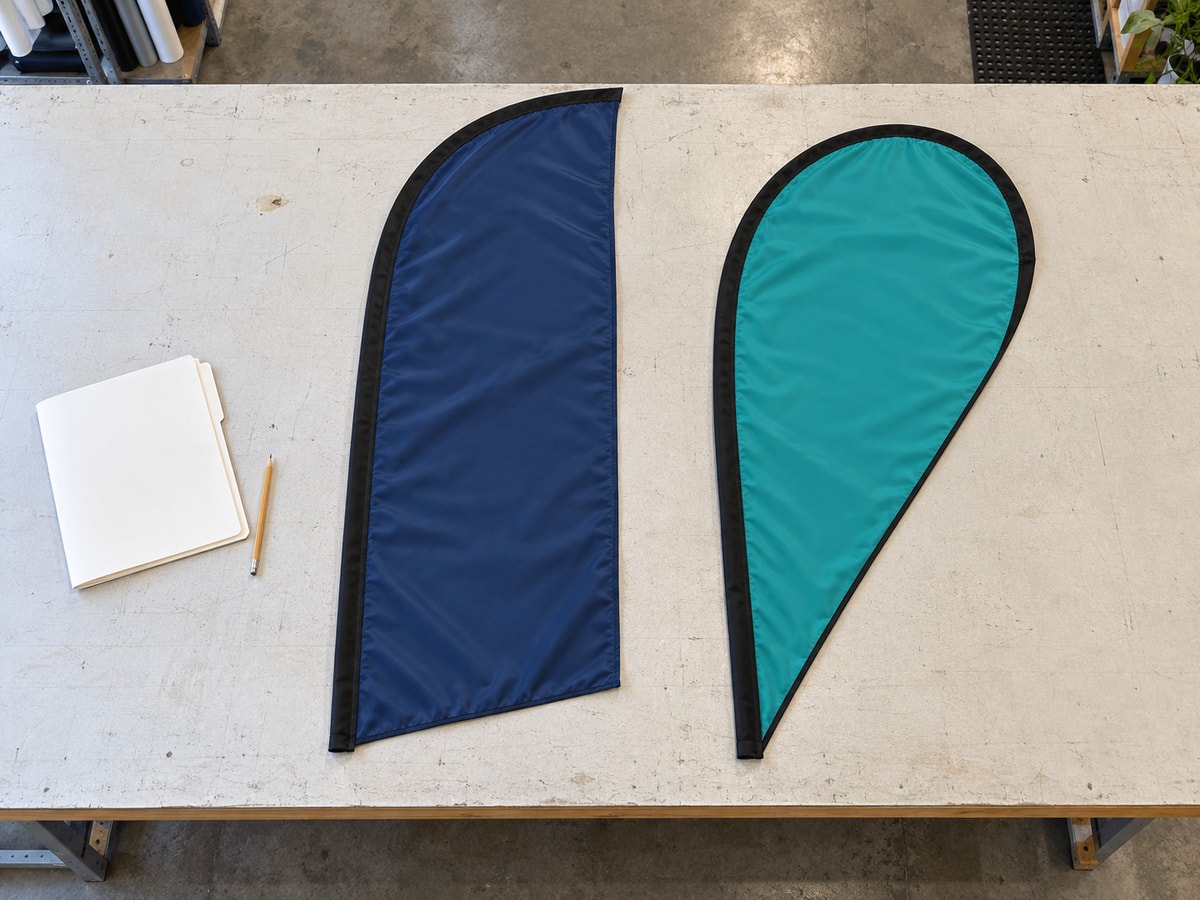
A documented repeat configuration can use the approved reference as its starting point. Confirm that the pole identity, finished flag specification and construction remain the same, then record the new artwork and quantity separately. The supplier still needs to confirm the proposed replacement against that reference.
A changed configuration needs a new decision. A different shape, pocket construction, upper termination, lower attachment or print construction should be identified as a change rather than hidden inside a reprint request. Ask what drawing or physical sample review is appropriate for that change before releasing the order.
An unidentified or damaged assembly remains open. A fabric-only order cannot resolve missing pole sections, uncertain hardware identity or a damaged attachment. Have the hardware reviewed through its manufacturer or an appropriate responsible party; do not treat a new printed flag as approval of the retained equipment.
For a proposed sample review, agree in advance on the identified pole set, the relevant assembly instructions, the observations to record and who can accept the result. Photographs of the installed outline, upper tip and lower retention can document that review. They do not establish a wind rating, structural capacity or compatibility with other pole models.
Prepare a replacement flag enquiry
CFW’s custom printed beach and event flags, reference CFW-2910, list polyester fabric, custom digital artwork and teardrop or feather-style enquiries. The flag, pole or complete package and its dimensions and mounting arrangement must be agreed for the order. For a retained third-party pole, ask whether the proposed replacement can be assessed against your specific reference; do not assume compatibility or that a pole and base are included.
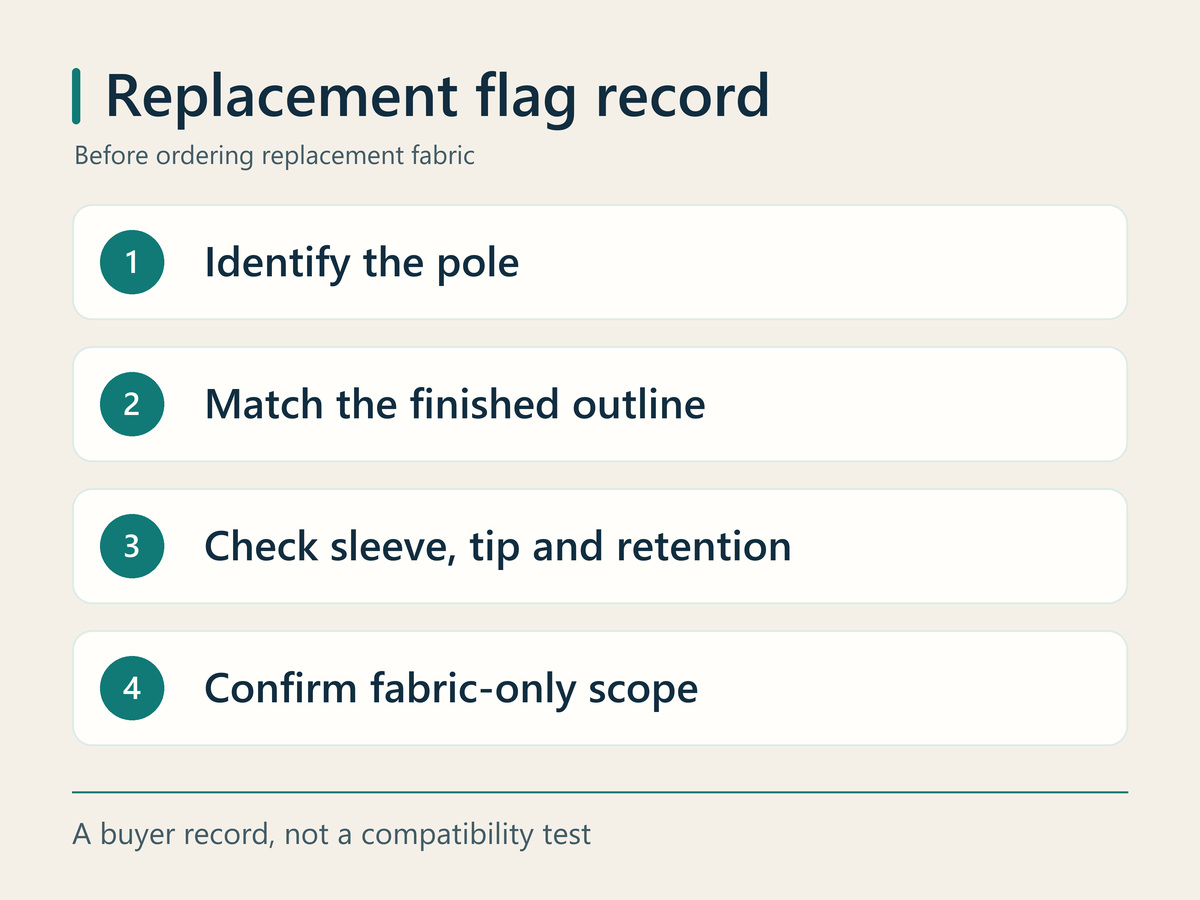
Prepare the hardware identity, marked reference photos, finished flag measurements and method, pocket and attachment details, intended print construction, artwork revision, quantity and destination. State which items are being retained and which are requested. Confirm the quotation’s scope and any remaining fit-review requirement before release.
Once the physical configuration is agreed, use the separate event flag artwork proof checklist for the graphic approval. Keep the fit decision and the artwork decision identifiable in the order record.
Send CFW the replacement-fit reference and requested order scope so the requirements can be reviewed. Ask the team how to transfer drawings or photos; the presence of a contact form does not establish an attachment-upload facility.
The replacement-fit record is original editorial synthesis from the cited product documentation and purchasing considerations. It is not first-party testing or approval of a particular assembly.